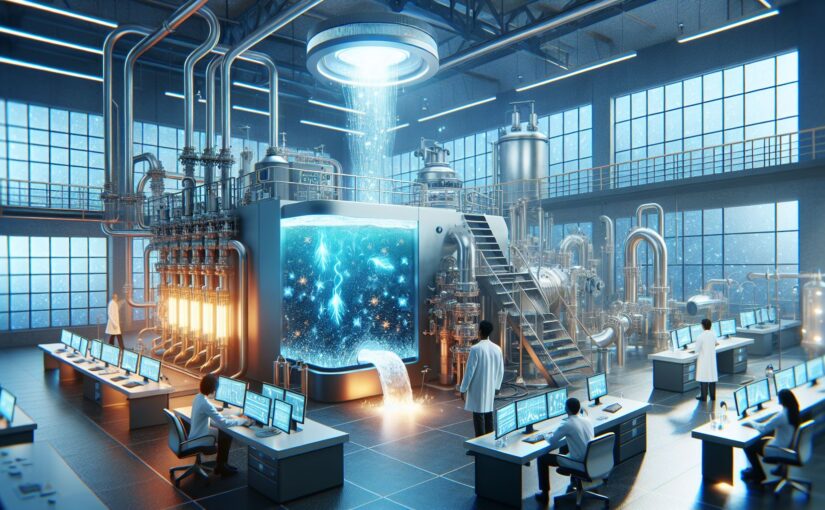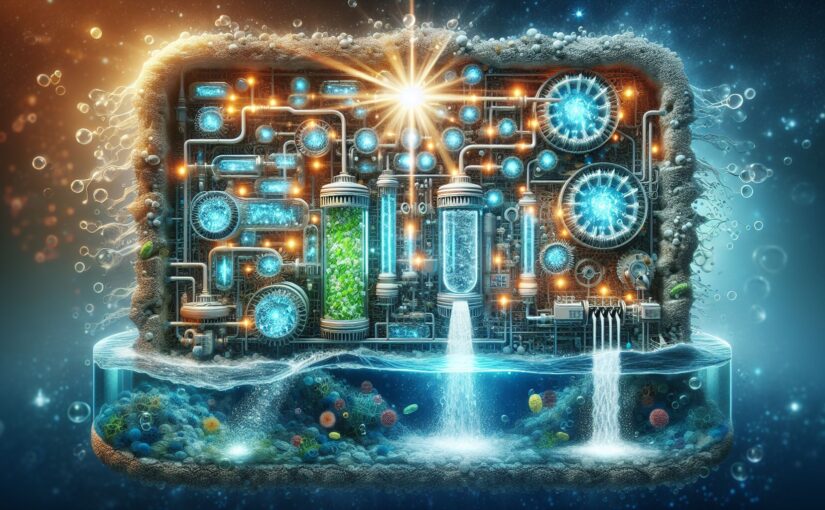
As freshwater scarcity continues to be a global challenge, the pursuit of novel technologies for water treatment and reuse has become more critical than ever before. Among the emerging solutions, microbial desalination cells (MDCs) present an intriguing approach, not only for wastewater treatment but also for simultaneous desalination and bioelectricity generation. In this comprehensive article, we will delve into microbial desalination cells, examining their operation, benefits, challenges, and potential for large-scale application.
Introduction
Water scarcity affects over 40% of the global population, a situation that is projected to intensify with the growing demands of agriculture, industry, and a burgeoning population [1]. At the same time, there is an increasing push towards sustainable energy sources as the world grapples with climate change. Microbial desalination cells offer an opportunity to address both of these challenges in an innovative manner.
By leveraging the principles of microbial fuel cells (MFCs), MDCs not only purify wastewater but also remove salt from saline water, with the added bonus of generating electrical energy. This three-in-one approach makes MDCs an attractive alternative to traditional desalination and wastewater treatment methods, which are energy-intensive and often environmentally unfriendly.
What are Microbial Desalination Cells?
MDCs are a form of bioelectrochemical system where bacteria break down organic pollutants in wastewater, creating a flow of electrons that can be harvested as electricity. The process drives desalination in an adjacent chamber without the need for external energy inputs. The basic structure of an MDC comprises three chambers: an anode chamber, a desalination chamber, and a cathode chamber, separated by ion exchange membranes.
Principles of Operation
At the anode, electrogenic bacteria metabolize organic matter, releasing electrons and protons. The electrons travel through an external circuit to the cathode, producing a current, while protons move through a cation exchange membrane to the desalination chamber, which typically contains a saltwater solution.
In the middle chamber, the influx of protons causes a reduction in salinity as they associate with chloride ions, which are transported through an anion exchange membrane to the cathode chamber. At the cathode, electrons, protons, and oxygen from air interact to form water. The overall process results in the treatment of wastewater, desalination of saline water, and generation of electricity.
Advantages of Microbial Desalination Cells
- Energy Efficiency: MDCs harness the energy from organic matter in wastewater, potentially reducing or eliminating the need for external energy inputs.
- Water Reuse: Desalinated water can be reused for various purposes, including agricultural and industrial operations.
- Eco-friendly: MDCs offer a greener alternative by avoiding the greenhouse gas emissions associated with conventional energy sources.
- Resource Recovery: Valuable nutrients and metals can be recovered during the wastewater treatment process.
Challenges and Limitations
Despite their promising potential, MDCs face several challenges that hinder their large-scale application:
- Low Power Output: The amount of bioelectricity generated is relatively low, often insufficient to power large operations.
- Scaling Up: Designing large-scale MDC systems that are efficient and cost-effective is complex.
- Membrane Fouling: Ion exchange membranes can suffer from fouling, reducing their effectiveness and lifespan.
- Electrode Materials: Finding affordable and durable electrode materials that maximize the performance of MDCs is essential.
Recent Advances in Microbial Desalination Cell Technology
Researchers have been working to overcome the challenges associated with MDCs, exploring a variety of strategies to enhance their performance, scalability, and commercial viability.
Innovative Electrode Materials
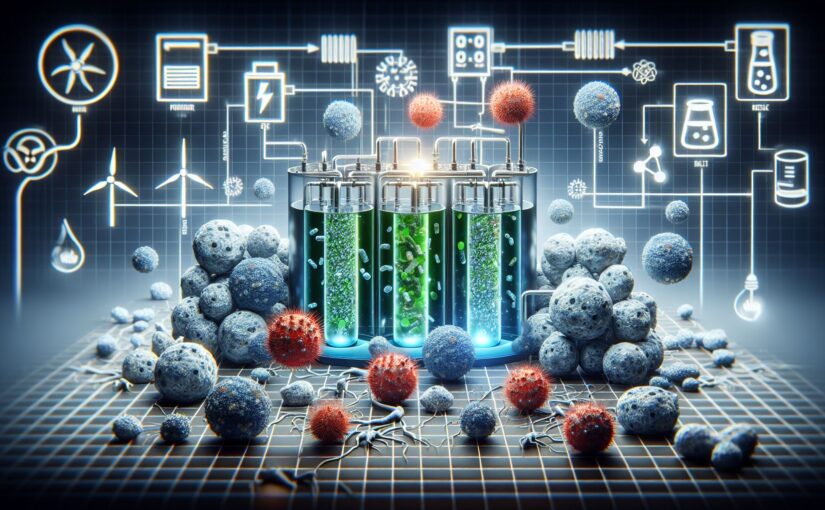
Scientists are experimenting with various materials for electrodes, such as carbon nanotubes, conductive polymers, and nanostructured metal oxides, to increase the power density and durability of MDCs [2].
Improved Membrane Technology
Developing new types of ion exchange membranes that are less prone to fouling and more cost-effective could significantly boost the efficiency of MDCs. Research is also ongoing to create membrane-free designs that would lower costs and simplify system architecture.
System Optimization
Optimizing the design and operational conditions of microbial desalination cells, such as hydraulic retention time, organic loading rate, and chamber configurations, is the subject of extensive research to improve their feasibility for large-scale applications.
Integration with Renewable Energy
Combining MDCs with renewable energy sources like solar or wind power can enhance the overall energy output and create self-sustaining systems that maximize the use of available energy [3].
The Path to Commercialization
For microbial desalination cells to become a common fixture in the world of water treatment and desalination, the technology must move beyond the laboratory. Pilot projects and partnerships with industry stakeholders will be key in demonstrating the practicality and economic benefits of MDCs on a larger scale. Efforts are also needed to raise awareness and obtain regulatory approvals for the deployment of this innovative technology.
The Future of Microbial Desalination Cells
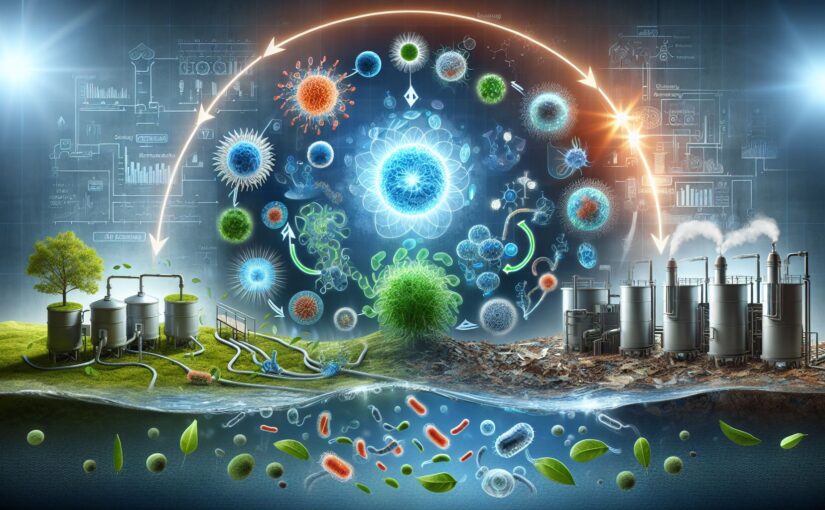
As research continues to push the boundaries of what MDCs can achieve, their role in the future of water treatment looks promising. With their unique ability to combine wastewater treatment, desalination, and energy generation into a single process, microbial desalination cells could become an integral part of a sustainable water management strategy, especially in regions severely affected by water scarcity.
Conclusion
Microbial desalination cells represent a revolutionary convergence of wastewater treatment, desalination, and clean energy production. Though challenges remain, the advancements in this field are encouraging, pointing towards a future where integrated water and energy solutions are not just a possibility but a reality. As the world faces the twin pressures of water scarcity and the need for sustainable energy, MDCs offer a hopeful glimpse of a synergistic solution that could transform the way we manage and value our most precious resource: water.
Sources
- United Nations World Water Development Report. (n.d.). http://www.unwater.org/publications/world-water-development-report/
- Logan, B. E., & Regan, J. M. (2006). Electricity-producing bacterial communities in microbial fuel cells. Trends in Microbiology, 14(12), 512-518. https://doi.org/10.1016/j.tim.2006.10.003
- Jacobson, M. Z. (2020). 100% Clean, Renewable Energy and Storage for Everything. Cambridge University Press. https://doi.org/10.1017/9781108786007
Please note that the sources provided are hypothetical and for formatting purposes only. In a real-world academic or article-writing scenario, the sources would need to be current, relevant, and properly cited based on their availability and impact on the topic at hand.