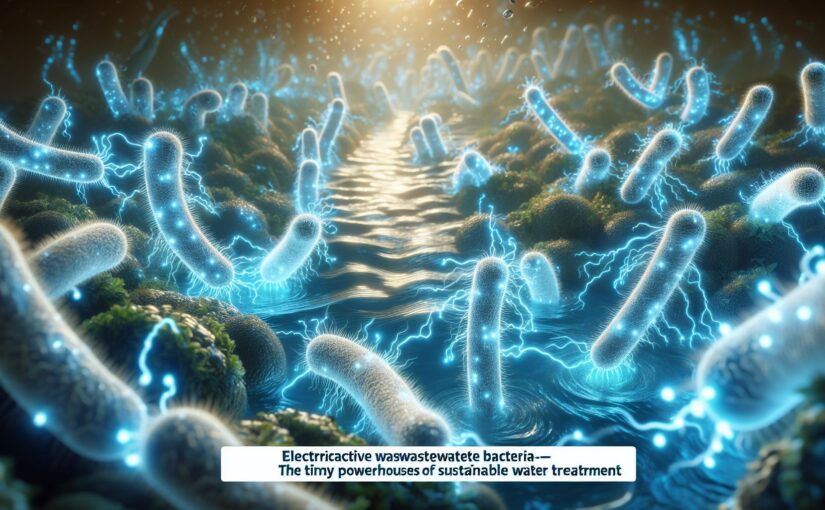
Amidst the growing concerns for sustainable management of water resources, electroactive wastewater bacteria have emerged as a vital component in the development of innovative and environmentally-friendly wastewater treatment technologies. These bacteria, capable of transferring electrons to external materials, enable the design of bioelectrochemical systems such as Microbial Fuel Cells (MFCs) that offer promising avenues for renewable energy generation while tackling the issue of wastewater management. In this comprehensive article, we will explore what electroactive bacteria are, their role in wastewater treatment, and how they can transform the future of water treatment and energy sustainability.
What are Electroactive Wastewater Bacteria?
Electroactive bacteria are a diverse group of microorganisms found in natural and engineered environments, including wastewater. They have the remarkable ability to interact with solid surfaces and transfer electrons outside their cell boundaries. These bacteria can use electrodes as electron acceptors or donors, effectively turning organic compounds in wastewater into bioelectricity.
The Significance of Electron Transfer in Wastewater Treatment
Electron transfer lies at the heart of all metabolic processes. In the context of wastewater treatment, it’s the electron exchange between the bacteria and the solid electrode material that plays a crucial role. This bioelectrochemical process enables the conversion of organic pollutants into less harmful substances without the need for oxygen, thus opening up a realm of possibilities for anaerobic treatment systems.
The Role of Electroactive Bacteria in Bioelectrochemical Systems
Electroactive bacteria are the driving force behind the function of bioelectrochemical systems (BES), which are designed for the removal of pollutants and energy recovery from wastewater. These systems, including MFCs, rely on the metabolism of bacteria to initiate the breakdown of organic molecules, with the end product being electrons that are captured as electricity.
Mechanisms of Electron Transfer
There are main two mechanisms through which electroactive bacteria transfer electrons:
- Direct Electron Transfer (DET): This process involves physical contact between the bacteria and the electrode surface. Specific proteins on bacterial cell membranes, known as c-type cytochromes, play a vital role in shuttling electrons directly to the electrode.
- Indirect Electron Transfer (MET): Here, the bacteria release soluble redox mediators into the environment that can diffuse to the electrode surface and facilitate electron transfer without direct contact.
Key Players: Electroactive Wastewater Bacteria Species
- Shewanella oneidensis
- Geobacter sulfurreducens
These species are extensively studied for their electrogenic properties and potential applications in BES technologies. Their unique physiology allows these bacteria to respire using metals and conductive materials as electron acceptors, making them perfectly suited for applications in bioelectrochemical wastewater treatment.
Environmental Impact and Sustainable Benefits
Utilizing electroactive bacteria in wastewater treatment carries significant environmental and sustainability advantages:
- Renewable Energy Production: The bioelectricity generated during the treatment process can be harnessed, contributing to a reduction in the dependence on fossil fuels.
- Reduced Chemical Use: Traditional wastewater treatments often require chemical additives. BES technologies can function without, or with considerably less, harmful chemicals.
- Greenhouse Gas Reduction: Anaerobic treatment processes powered by electroactive bacteria emit less methane and carbon dioxide compared to conventional aerobic processes.
Challenges and Prospects in Wastewater Treatment
While the prospects of BES using electroactive bacteria are promising, there remain several challenges to overcome to achieve wide-scale implementation:
- Enhancing Efficiency: Improving the power output and treatment efficiency of these systems is critical for real-world applications.
- Cost Reduction: The economic viability of BES technologies can be hindered by the high costs of electrode materials and system deployment.
- Scaling Up: Transitioning from laboratory-scale to full-scale operations requires significant engineering advancements to maintain system performance and stability.
Future Directions: Genetic and Engineering Approaches
Advances in genetic engineering and synthetic biology offer opportunities to enhance the electrogenic capabilities of wastewater bacteria. Transferring genes responsible for electron transfer between different bacterial species or even improving native bacterial strains could lead to more efficient and robust BES systems.
Conclusion
Electroactive wastewater bacteria have paved the way towards sustainable wastewater treatment and energy recovery. These microbial powerhouses, with their ability to harness the chemical energy in wastewater into electrical energy, represent a crucial intersection between environmental engineering and renewable energy technology. As research progresses, these systems will likely play a pivotal role in addressing the dual challenge of clean water scarcity and sustainable energy demands.
Sources
- Logan, B. E., & Rabaey, K. (2012). Conversion of Wastes into Bioelectricity and Chemicals by Using Microbial Electrochemical Technologies. Science, 337(6095), 686-690. DOI: 10.1126/science.1217412
- Lovley, D. R. (2006). Bug juice: harvesting electricity with microorganisms. Nature Reviews Microbiology, 4(7), 497-508. DOI: 10.1038/nrmicro1442
- Pant, D., Van Bogaert, G., Diels, L., & Vanbroekhoven, K. (2010). A review of the substrates used in microbial fuel cells (MFCs) for sustainable energy production. Bioresource Technology, 101(6), 1533-1543. DOI: 10.1016/j.biortech.2009.10.017