With the rapid increase in global industrialization and population growth, the demand for sustainable wastewater treatment methods capable of not only reducing the pollutant load but also recovering valuable resources has become critically important. One innovative approach that has been garnering attention is the use of microbial fuel cells (MFCs) for wastewater treatment. This technology not only promises effective bioremediation but also the generation of renewable energy in the form of bioelectricity.
In this comprehensive article, we will delve deep into the realm of Microbial Fuel Cells for Wastewater Treatment (keyword 13), exploring their potential, mechanisms, challenges, and future prospects. We’ll also touch upon the power of electroactive wastewater bacteria and the critical role of electron transfer in these bioelectrochemical systems.
Understanding Microbial Fuel Cells (MFCs)
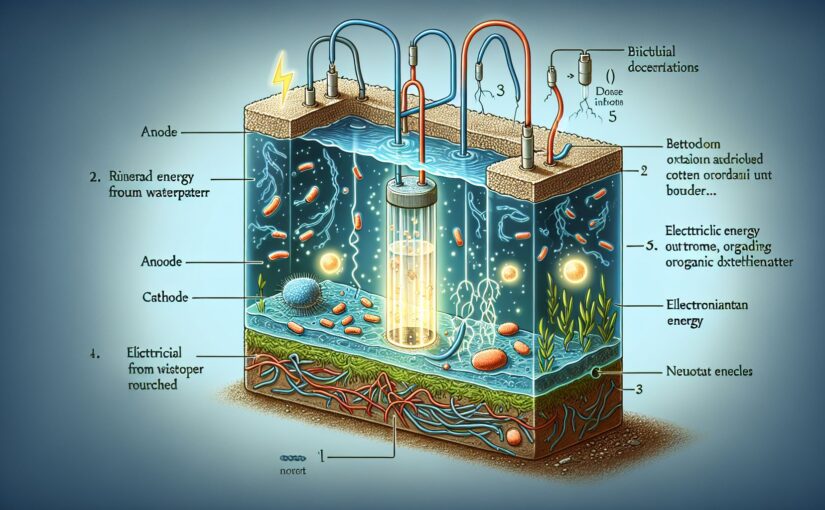
Microbial fuel cells are bioelectrochemical systems that harness the natural metabolic processes of bacteria to convert organic substrates in wastewater into electrical energy. In essence, MFCs create a bridge between biological energy conversion and electricity generation, leading to an environmentally friendly and sustainable solution for both wastewater treatment and energy production.
Fundamental Components of MFCs:
- Anode Chamber: Where electroactive bacteria oxidize organic matter, releasing electrons and protons.
- Cathode Chamber: Where electrons complete the circuit and react with a terminal electron acceptor, usually oxygen.
- Proton Exchange Membrane (PEM): It separates the anode and cathode chambers but allows protons to pass.
- External Circuit: Enables electron flow, which can be utilized to power devices or charge batteries.
The Role of Electrogenic Bacteria
The heart of MFC technology lies in the capabilities of electrogenic or electroactive bacteria. These remarkable microorganisms can transfer electrons outside their cells to external acceptors, such as metal oxides in their natural habitats or electrodes in MFCs. Genera such as Shewanella and Geobacter are often studied due to their prominent electrogenic characteristics.
Electron Transfer Mechanisms:
- Direct Electron Transfer (DET): Bacteria form physical connections like nanowires or pili to directly transfer electrons to the electrodes.
- Mediated Electron Transfer (MET): Bacteria release soluble redox mediators that shuttle electrons to the electrodes.
Bioelectricity Generation from Wastewater
Wastewater often contains a high organic load, providing a nutrient-rich environment for electrogenic bacteria. By installing MFCs in wastewater treatment plants, these organics can be metabolized by bacteria, generating bioelectricity and thereby offsetting part of the energy demands of the treatment process.
Key Advantages of Bioelectricity Generation:
- Renewable Energy Production: MFCs offer a way to produce electricity from the organic matter present in wastewater.
- Greenhouse Gas Reduction: By capturing the energy from wastewater, MFCs reduce the reliance on fossil fuels and associated greenhouse gas emissions.
- Energy-efficient Treatment: MFCs operate at ambient temperatures and do not require aeration, unlike conventional treatment processes that are energy-intensive.
Challenges and Innovations in MFCs
Despite their potential, MFCs face several challenges that hinder their widespread adoption.
Challenges:
- Low Power Output: The power density of MFCs is often low, requiring significant improvements to reach commercial viability.
- Electrode Materials: The selection of cost-effective and efficient electrode materials is crucial for enhancing the performance of MFCs.
- Scaling Up: Engineering MFCs that can handle the volume and complexity of real-world wastewater treatment plants remains a technical challenge.
Innovations to Address Challenges:
- Advanced Electrode Materials: Researchers are experimenting with carbon-based electrodes and catalyst-coated electrodes to improve the conductivity and biocompatibility of MFCs.
- System Design Optimization: Stacked and continuous flow MFCs are being developed to increase the system’s efficiency and scalability.
- Integrating with Other Technologies: Combining MFCs with processes like anaerobic digestion or algae cultivation could enhance overall treatment efficiency and resource recovery.
Future Prospects
The scalability of MFC technology is one of the critical aspects that will determine its role in future wastewater treatment scenarios. With ongoing research focused on improving power density, coulombic efficiency, and electrode materials, the day might not be too far when MFCs could become a standard component of modern wastewater treatment plants.
Potential for Revolutionizing Wastewater Treatment:
- Resource Recovery: MFCs provide a platform for recovering valuable by-products such as biohydrogen and bioplastics.
- Desalination: Recent work on microbial desalination cells reveals they could be integrated into MFCs for simultaneous wastewater treatment and desalination.
- Biosensors: MFCs have potential applications as biosensors for real-time monitoring of water quality and pollutant levels.
Conclusion
Microbial fuel cells represent a convergence of wastewater treatment and renewable energy generation. Harnessing the power of electroactive bacteria to clean water and generate electricity is a testament to the innovative applications of environmental biotechnology. Through continued research and development, MFCs may soon provide a sustainable and energy-positive solution to one of the modern world’s pressing environmental challenges.
Sources
-
Logan, Bruce E. “Microbial Fuel Cells.” Wiley-Interscience, 2008. This comprehensive book by one of the leading researchers in the field of MFCs provides an in-depth look at the principles and applications of microbial fuel cells.
-
Rozendal, R. A., et al. “Towards Practical Implementation of Bioelectrochemical Wastewater Treatment.” Trends in Biotechnology, vol. 26, no. 8, 2008, pp. 450-459. DOI: 10.1016/j.tibtech.2008.04.008. This scholarly article discusses the practical considerations and future prospects for implementing bioelectrochemical systems in wastewater treatment.
-
He, Zhen, et al. “Microbial Fuel Cells: Methodology and Technology.” Environmental Science & Technology, vol. 40, no. 17, 2006, pp. 5181-5192. DOI: 10.1021/es0605016. This research paper provides an overview of the methodology and technology behind microbial fuel cells, offering insight into the key challenges and solutions associated with MFCs in wastewater treatment.
The exploration of microbial fuel cells for wastewater treatment opens the door to a future where clean water and sustainable energy go hand in hand, marking an exciting intersection of environmental science and engineering innovation.