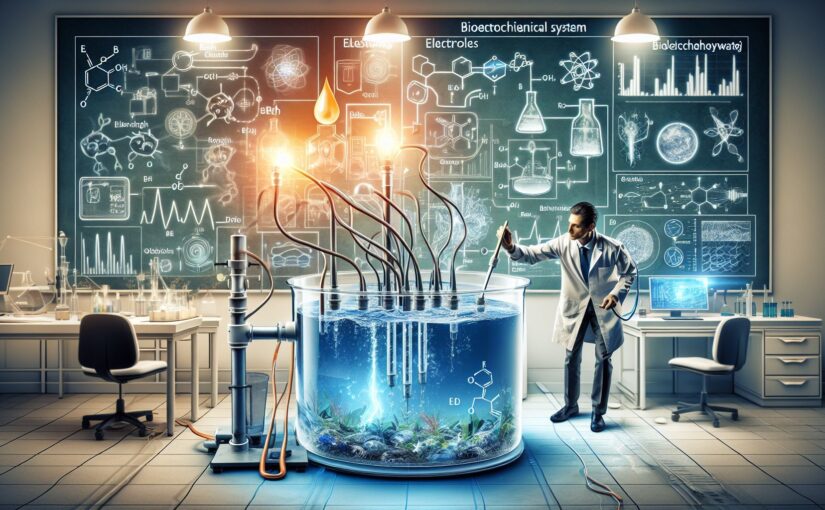
In this era of rapid industrialization and population growth, wastewater management has become a crucial environmental challenge. With an increasing emphasis on sustainability and resource recovery, the concept of renewable energy from wastewater has gained significant traction. This article delves into the innovative process of generating renewable energy from wastewater and the role bioelectrochemical systems (BES) play in this domain.
Introduction
Wastewater contains a substantial amount of organic matter that can be harnessed to generate energy. The conventional methods of treating wastewater are usually energy-intensive and less focused on energy recovery. However, Bioelectrochemical Systems (BES), particularly Microbial Fuel Cells (MFCs), have emerged as a promising technology for the direct conversion of the chemical energy in wastewater into electricity through the metabolic processes of microorganisms.
The Significance of Renewable Energy from Wastewater
Renewable energy plays a crucial role in mitigating climate change and reducing our reliance on fossil fuels. By harvesting energy from wastewater, we can achieve the dual benefits of treating waste and producing clean energy.
The Principle of Bioelectrochemical Systems
Bioelectrochemical Systems (BES) operate on the principle of capturing the electrons released by bacteria as they metabolize organic substances. These electrons travel from the bacteria across an electrode and an external circuit, creating a flow of electricity. The system primarily comprises an anode, cathode, and an electrolyte to facilitate ionic transfer.
Understanding Microbial Fuel Cells
Microbial Fuel Cells (MFCs), a type of BES, utilize electrogenic bacteria to oxidize organic matter and generate electricity. The basic setup includes two chambers: an anaerobic anodic chamber where wastewater is introduced and a cathodic chamber. These are separated by a proton exchange membrane that allows only protons to pass through while electrons travel through the external circuit.
Electroactive Wastewater Bacteria: The Heart of MFCs
Electroactive bacteria, also known as exoelectrogens, play a pivotal role in MFCs. They are capable of extracellular electron transfer, which allows them to interact with the anode and release electrons. Geobacter sulfurreducens and Shewanella oneidensis are two commonly studied exoelectrogens.
Extracellular Electron Transfer Mechanisms
There are two main types of extracellular electron transfer mechanisms:
-
Direct Transfer: This involves physical contact between the bacteria and the electrode. Certain bacteria form biofilms on the electrode surface, facilitating electron transfer through membrane-bound cytochromes or conductive pili known as nanowires.
-
Indirect Transfer: In some cases, bacteria produce soluble redox mediators that shuttle electrons from the cells to the electrode. These mediators can be naturally produced by the bacteria, or artificially added to the system (mediator-based MFCs).
Advancements in Electron Transfer Mechanisms and MFC Components
Anode Materials
The choice of anode material significantly impacts the efficiency of electron transfer. Carbon-based electrodes, known for their high conductivity and biocompatibility, are frequently used. However, research into catalyst-coated electrodes aims to enhance performance and reduce costs.
Proton Exchange Membranes
The proton exchange membrane determines the internal resistance and overall efficiency of MFCs. Research is focused on developing cost-effective and efficient membranes that prevent oxygen crossover while allowing maximum proton transfer.
Cathode Catalysis
The cathode reaction, typically the oxygen reduction reaction, is a limiting step in MFCs. Catalyst-coated electrodes are being explored to speed up this reaction. Platinum is an effective catalyst, but alternatives like carbon-based materials and metal-organic frameworks are being studied for economic feasibility.
Energy Recovery and Sustainability
Conversion of Chemical Energy to Electricity
In MFCs, the chemical energy of wastewater organics is directly converted into electrical energy, bypassing the need for combustion or other energy-intensive processes. This direct conversion can lead to higher overall system efficiencies.
Renewable Aspect of Wastewater
Wastewater is a continuously generated resource. This means the potential for energy recovery is ongoing, making it a highly renewable source for electricity production.
Wastewater Treatment and Bioelectricity Generation: A Dual Benefit
MFCs do not just generate electricity; they also contribute to wastewater treatment. As bacteria consume organic pollutants, the effluent water quality improves, achieving treatment goals in tandem with energy production.
Case Studies and Real-world Examples
There have been numerous pilot projects and studies demonstrating the efficacy and potential of MFCs for renewable energy generation from wastewater. One such pioneering project is the ‘Plant-Microbial Fuel Cell’ which integrates living plants into the system. The roots of the plants create a conducive environment for the electrogenic bacteria increasing the overall efficiency.
The Challenge of Scaling Up
While laboratory studies and pilot projects have been successful, scaling up MFCs to handle real-world wastewater treatment volumes is a significant challenge. Issues such as cost, system robustness, and consistent performance need to be addressed. The complexity increases with continuous flow MFCs designed for dynamic wastewater treatment plants with varying inflow conditions.
Economic and Environmental Impact
The Potential for Cost Savings and Energy Independence
If successfully scaled, MFCs could drastically cut the energy costs associated with wastewater treatment. Moreover, they could help in moving towards energy-neutral or even energy-positive treatment facilities.
Contribution to Carbon Emission Reduction
By generating renewable energy, MFCs can help in reducing greenhouse gas emissions linked to electricity production from non-renewable sources.
The Road Ahead
Research into materials, system design, and a better understanding of microbial consortia is paving the way for more efficient and economically viable MFCs. Advances such as stacked MFCs and continuous flow systems show promise for future applications.
Conclusion
Generating renewable energy from wastewater is an exciting field with both environmental and economic potential. Bioelectrochemical Systems, especially Microbial Fuel Cells, stand at the forefront of this technology. With continued research and development, the prospect of using wastewater as a resource for clean energy could become a reality, contributing to the sustainability goals of our modern society.
References
- Logan, B. E., & Regan, J. M. (2006). Electricity-producing bacterial communities in microbial fuel cells. Trends in Microbiology, 14(12), 512-518.
- Rabaey, K., & Rozendal, R. A. (2010). Microbial electrosynthesis — revising the electrical promise of microorganisms. Nature Reviews Microbiology, 8(4), 706-716.
- He, Z., & Mansfeld, F. (2009). Exploring the use of electrochemical impedance spectroscopy (EIS) in microbial fuel cell studies. Energy & Environmental Science, 2(2), 215-219.