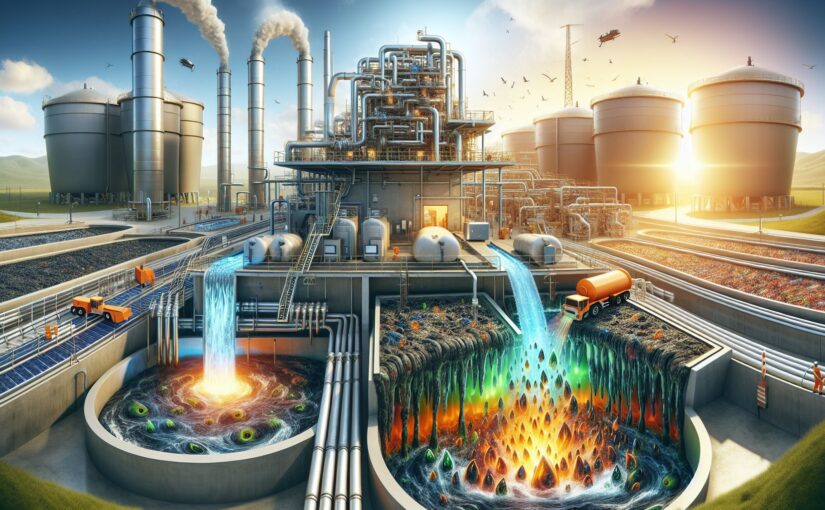
The quest for renewable energy sources has been one of the most significant quests of modern engineering and environmental science, given the exigency to mitigate climate change and reduce reliance on fossil fuels. Among the array of renewable energy options, harnessing energy from wastewater presents a compelling, albeit less talked about, avenue. This article delves into the concepts, mechanisms, and potential of generating renewable energy from wastewater, an approach that does not just promise energy but also purifies water, turning waste disposal into a sustainable energy resource.
Introduction to Wastewater as a Renewable Energy Source
Wastewater, typically perceived as a disposal problem, contains organic matter which holds a substantial amount of chemical energy. When organic matter decomposes, it releases energy that, if captured, can be utilized for various purposes. Wastewater treatment plants (WWTPs) traditionally consume large quantities of energy to purify water through various mechanical and chemical processes. However, innovative technologies like Microbial Fuel Cells (MFCs) can exploit the energy content of wastewater while treating it, converting waste into watts.
What Are Microbial Fuel Cells?
Microbial Fuel Cells are bio-electrochemical systems that drive a current by using bacteria as the catalysts to oxidize organic and inorganic matter present in wastewater. The microorganisms break down the waste materials and in the process, transfer electrons to an electrode, generating electricity. This represents a form of bioenergy — energy produced using biological materials.
The Science Behind MFCs
MFCs primarily consist of an anode and a cathode separated by a proton exchange membrane. The organic matter in wastewater is oxidized at the anode by microorganisms, releasing electrons and protons. Electrons flow through an external circuit to reach the cathode, generating an electric current while the protons pass through the membrane. At the cathode, electrons, protons, and oxygen (from air) combine to form water.
Electroactive Wastewater Bacteria
The success of MFCs depends largely on electroactive bacteria, which are capable of transferring electrons outside their cells to the anode. These bacteria, known as exoelectrogens, are a key part of the electron transfer mechanisms that drive electricity generation in MFCs.
Electron Transfer Mechanisms
The electron transfer from bacteria to the anode can occur through direct contact or through mediators. Direct electron transfer involves physical connections between bacterial cell surfaces and the electrode, often facilitated by bacterial appendages called pili that possess conductive properties. Alternatively, mediator-based MFCs employ compounds that shuttle electrons from bacteria to the electrode.
The Potential of Wastewater-derived Renewable Energy
Environmental Benefits
Converting wastewater into a source of energy offers a dual benefit. Not only does it provide a renewable source of electricity, but it also contributes to water purification. This sustainable approach aligns with the pressing need to reduce the carbon footprint of water treatment processes.
Economic Impact
Adopting MFC technology can lead to substantial energy savings for WWTPs. Though the initial investment may be significant, the long-term cost reductions in energy consumption and potential revenue from electricity generation could make this a viable economic proposition.
Scaling and Future Development
While MFC technology is promising, scaling it up to handle the capacities of municipal WWTPs presents challenges. Research is ongoing to improve the power output and efficiency of MFCs, which includes optimizing electrode materials and configurations, as well as exploring novel designs like stacked or continuous flow MFCs.
Challenges and Considerations
Power Density and Efficiency
Although MFCs can generate electricity, the power density (power per unit area of the electrode) is currently much less than conventional power sources. Similarly, coulombic efficiency (the percentage of electrons from oxidized substrate that contributes to current production) is a critical parameter that needs enhancement for practical application.
Technological Hurdles
For MFCs to be a widespread solution, they must overcome hurdles such as cost-effective materials, long-term stability, and integration with existing infrastructure. Advances in electrode materials, specifically carbon-based or catalyst-coated electrodes, are essential to improve the economic and technical feasibility of MFCs.
Regulatory and Social Acceptance
Deployment at a large scale would require not just technological readiness but also regulatory frameworks that support renewable energy from wastewater. Furthermore, societal acceptance is crucial, as public perception can significantly impact the adoption of alternative energy technologies.
Conclusion
Renewable energy generation from wastewater presents a tantalizing opportunity to tackle two critical issues: energy sustainability and waste management. The burgeoning field of MFCs exemplifies the kind of innovative thinking necessary to transition to a more circular economy where waste becomes a resource. With ongoing research and development, the hope is that one day, wastewater treatment plants will be energy-neutral or even energy-positive facilities that contribute to the grid rather than merely consuming electricity.
In closing, the vision of renewable energy from wastewater is not just a pipe dream. It symbolizes a convergence of environmental stewardship and energy innovation that embodies the kind of future we need to strive for — cleaner, efficient, and sustainable.
Sources
- Logan, B. E. (2008). Microbial Fuel Cells. John Wiley & Sons, Inc.
- Rabaey, K., & Rozendal, R. A. (2010). Microbial electrosynthesis — revisiting the electrical route for microbial production. Nature Reviews Microbiology, 8(10), 706-716.
- Heidrich, E. S., Edwards, S. R., Dolfing, J., Cotterill, S. E., & Curtis, T. P. (2011). Performance of a pilot scale microbial fuel cell fed on domestic wastewater at ambient temperatures for a 12-month period. Bioresource Technology, 102(10), 6123-6127.