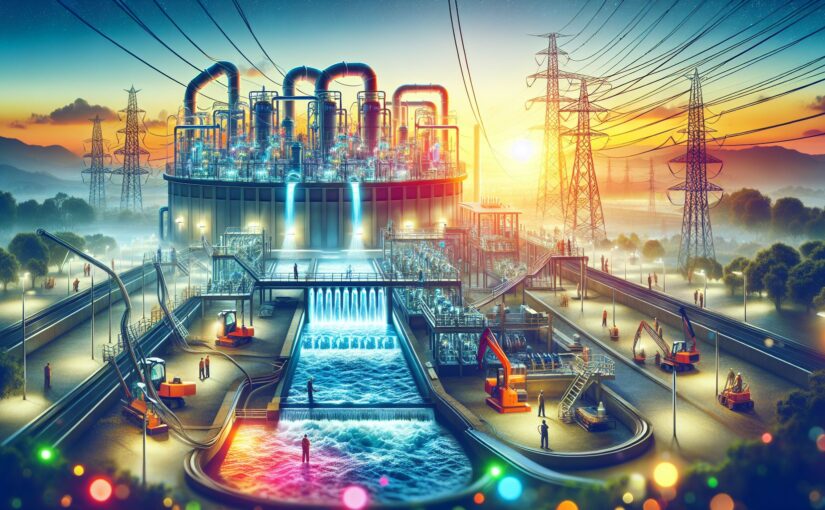
The quest for sustainable energy sources has been at the forefront of scientific research for decades. Amidst this endeavor, an increasingly important focus is being placed on wastewater treatment processes, not just for their capacity to reduce pollution, but also for their potential to generate energy. This intertwining of waste management and energy production has led to the pioneering concept of obtaining renewable energy from wastewater, which could revolutionize how we approach both environmental protection and energy self-sufficiency. In this comprehensive article, we will delve into the mechanisms, benefits, and future prospects of harnessing renewable energy from wastewater.
The Inception of a Sustainable Solution
Wastewater is an abundant resource that is continually produced by residential, commercial, and industrial activities. Traditionally, wastewater treatment has been an energy-intensive process aimed merely at mitigating its environmental impacts. However, recent technological advances have exposed the energy-rich potential hidden within wastewater, specifically through the application of microbial fuel cells (MFCs).
Microbial Fuel Cells: The Heart of the Operation
Microbial fuel cells are bio-electrochemical systems that convert the chemical energy found in organic waste directly into electrical energy through the metabolic processes of microorganisms. These microbes, known as electroactive bacteria, serve as biocatalysts at the anode of the MFC, oxidizing organic matter and releasing electrons. The electrons then flow through an external circuit to the cathode, generating an electrical current.
Electroactive Wastewater Bacteria
Within the microbial consortium present in wastewater, a subset of bacteria exhibits electrogenic properties. These microorganisms, often referred to as exoelectrogens, have the unique ability to transfer electrons outside their cell membranes. Species such as Shewanella oneidensis and Geobacter sulfurreducens fall into this category and are key to the functioning of MFCs.
Exoelectrogenic Mechanism
The process of electron transfer from bacteria to the anode, known as extracellular electron transfer (EET), can occur through direct contact with the electrode surface or via mediators—either natural compounds produced by the bacteria or artificial ones added to the system.
Mediator-less and Mediator-based Wastewater MFCs
MFCs can be designed as mediator-less systems, wherein bacteria directly colonize the anode, forming a biofilm that facilitates direct electron transfer. Alternatively, mediator-based systems deploy chemicals to shuttle electrons from bacteria to the electrode.
The Benefits of Generating Renewable Energy from Wastewater
- Dual-purpose technology: It treats wastewater while simultaneously producing electricity, reducing the operational costs of wastewater treatment facilities.
- Reduction of greenhouse gases: By offsetting the use of fossil fuels for electricity generation, MFCs can help lower carbon emissions associated with wastewater treatment.
- Resource recovery: Alongside bioelectricity, MFCs can facilitate the recovery of useful byproducts such as hydrogen gas or clean water, depending on the system configuration.
Technological Advances and Optimization Strategies
Electrode Materials and Designs
Recent investigations into MFC technology have emphasized the importance of electrode materials and designs. High surface area electrodes made from carbon-based materials or coated with catalysts have proven to increase energy yields.
Catalytic Coatings and Their Role
The use of catalyst-coated electrodes, such as those enhanced with metal nanoparticles or conductive polymers, can significantly improve the efficiency of electron transfer, raising the power output of MFCs.
System Configurations: Scaling Up and Continuous Flow
Scaling up MFCs for practical applications is a complex challenge that requires the proper engineering of system configurations, including continuous flow MFCs, to handle the high volumes of wastewater generated by municipalities.
Continuous Flow MFCs
These MFCs are designed to allow wastewater to flow continually through the cell, which can lead to improved performance and ease of integration into existing treatment facilities.
Stacked MFCs
Stacking multiple MFC units can enhance power density and make the system more compact, which is crucial for large-scale applications.
Operational Parameters: Power Density and Coulombic Efficiency
To maximize the energy extracted from wastewater, it’s imperative to optimize the MFC’s power density and coulombic efficiency. Power density reflects the system’s capacity to generate electricity per unit volume or area, while coulombic efficiency indicates the proportion of electrons derived from substrate degradation that contribute to current generation.
Polarization Curves
Polarization curves are used to evaluate the performance of MFCs by plotting the voltage against current density, revealing vital information about power output and identifying ideal operating conditions.
The Future of Energy Generation from Wastewater
Pioneering research and technological advancements continue to unfold the potential of wastewater as a renewable energy source. As we understand the complexities of microbial interactions and electron transfer mechanisms more deeply, the efficiency and scalability of these systems will likely improve.
Emerging Concepts and Applications
- Microbial Electrolysis Cells (MECs): These cells are similar to MFCs but are designed primarily for hydrogen production from wastewater, offering another renewable energy source.
- Microbial Desalination Cells: These systems treat wastewater and desalinate saline water in a single process driven by bacterial metabolism, showcasing the multi-functional potential of bioelectrochemical systems.
- Biosensors for Monitoring: MFCs can be employed as biosensors within treatment facilities, using changes in electrical output to monitor wastewater composition and treatment efficiency.
The Roadmap to Widespread Application
The practical integration of renewable energy generation from wastewater requires not only technological innovation but also regulatory support, investment in infrastructure, and public-private partnerships.
Conclusion and Prospects
Generating renewable energy from wastewater presents a compelling opportunity to address two major global challenges: environmental sustainability and renewable energy supply. As research progresses and these systems become more refined and cost-effective, the possibility of creating a clean, self-sustaining wastewater treatment infrastructure becomes increasingly viable.
Sources
- Logan, B.E., & Regan, J.M. (2006). Electricity-producing bacterial communities in microbial fuel cells. Trends in Microbiology, 14(12), 512-518. DOI
- Rabaey, K., & Rozendal, R.A. (2010). Microbial electrosynthesis — revisiting the electrical route for microbial production. Nature Reviews Microbiology, 8(10), 706-716. DOI
- Pant, D., Van Bogaert, G., Diels, L., & Vanbroekhoven, K. (2010). A review of the substrates used in microbial fuel cells (MFCs) for sustainable energy production. Bioresource Technology, 101(6), 1533-1543. DOI
Note: This article is for informational purposes and does not necessarily reflect the most recent developments in the field of renewable energy from wastewater, as the knowledge cutoff date is March 2023.