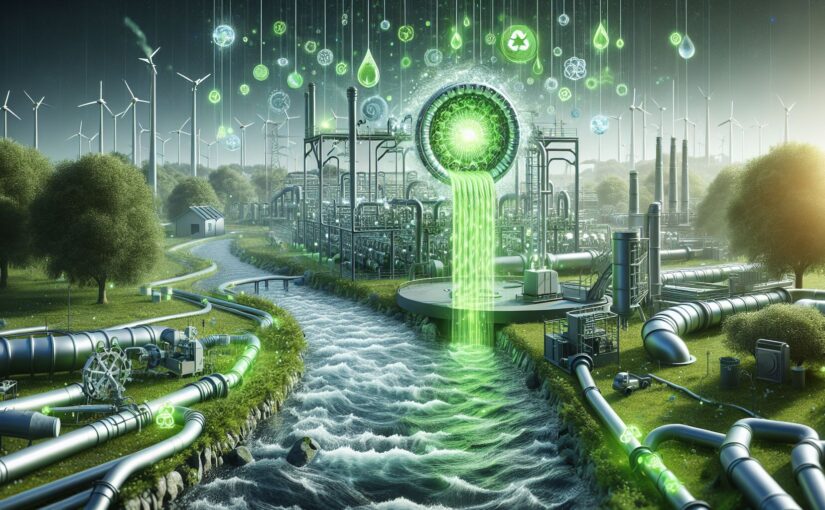
In the quest for sustainable and environment-friendly energy resources, scientists and engineers have turned their attention to one of the most unexpected places: wastewater. Wastewater is abundant and continuously produced by human activities, but rather than being just a waste product, it can be a valuable resource for renewable energy generation. In this context, renewable energy from wastewater has emerged as a promising frontier in clean technology.
Understanding Wastewater Bioelectrochemical Systems
Bioelectrochemical systems (BES) provide a remarkable process by which microorganisms can convert organic matter in wastewater into electricity. The heart of a BES is the microbial fuel cell (MFC), which leverages the metabolic processes of electroactive bacteria to directly generate electric current. These bacteria, also known as exoelectrogens, can transfer electrons outside their cell membranes during the breakdown of organic substrates. This electron transfer is harnessed in MFCs, essentially turning wastewater treatment plants into power generators.
Electroactive Wastewater Bacteria and Exoelectrogens in Wastewater
Understanding the role of electroactive wastewater bacteria is crucial in optimizing the efficiency of BES. These bacteria are a specialized group capable of “breathing” metal oxide surfaces of electrodes instead of oxygen or other soluble electron acceptors in their environment. Exoelectrogens in wastewater can adhere to an electrode (the anode) and donate electrons they obtain from the organic compounds in wastewater. By capturing these electrons, we are essentially intercepting a part of the bacterial respiration process to produce electricity.
Anode Respiring Wastewater Bacteria and the Wastewater Bioanode
The bioanode is the electrode where the anode respiring wastewater bacteria oxidize the organic matter and transfer the resulting electrons. The efficiency of the bioanode is paramount, as it directly affects the overall power output of the MFC. It depends on various parameters, including the surface area, material, and the interface between the bacteria and the electrode.
Electron Transfer Mechanisms in Wastewater
Electron transfer is at the core of energy production in BES. Electron transfer mechanisms in wastewater can occur via direct contact between bacteria and the electrode or through mediators that shuttle electrons from bacteria to the electrode. Mediator-based wastewater MFCs employ artificial mediators, while mediator-less wastewater MFCs rely on bacteria that can transfer electrons directly to the electrode or use natural mediators.
Wastewater Substrate Degradation and Microbial Fuel Cells for Wastewater Treatment
When discussing wastewater substrate degradation, it refers to the breakdown of organic compounds in wastewater by bacteria. As these substrates are degraded in microbial fuel cells, not only is electrical energy produced, but the wastewater itself is treated, leading to a cleaner effluent. Microbial fuel cells for wastewater treatment therefore offer a dual advantage of energy recovery and pollutant reduction.
Renewable Energy from Wastewater: A Dual Benefit System
The notion of renewable energy from wastewater encompasses both the generation of electric power and the treatment of wastewater. By using BES, the organic load of wastewater is reduced lessening the environmental impact while producing a stream of renewable energy.
Bioelectricity Generation from Wastewater
Bioelectricity generation from wastewater is a fascinating process that promises to revolutionize the way we approach energy production and wastewater treatment. The microbial breakdown of organic matter releases electrons that can be harnessed as a form of electric power, which is not only renewable but also helps mitigate the emission of greenhouse gases.
Power Density and Coulombic Efficiency in Wastewater MFCs
Power density in wastewater MFCs is a measure of the electric power that can be produced per unit volume of the reactor, while Coulombic efficiency in wastewater MFCs is the fraction of electrons from the substrate that ends up as electrical current. Both are critical parameters for evaluating the performance of MFCs and are influenced by factors such as electrode materials, reactor design, and operational conditions.
Electrode Materials for Wastewater MFCs
The choice of electrode materials for wastewater MFCs greatly affects their electricity-producing capabilities. Traditionally, carbon-based electrodes for wastewater MFCs have been popular due to their high conductivity and chemical stability. Recent advancements include the use of catalyst-coated electrodes for wastewater MFCs, which catalyze the reactions at electrodes, leading to increased efficiency.
Scaling up and Innovation in Wastewater MFCs
For the practical implementation of BES technology on a larger scale, specific challenges need to be addressed.
Scaling Up Wastewater MFCs
Scaling up wastewater MFCs involves developing reactors that can handle the large volumes of wastewater produced by municipalities and industries while maintaining efficiency. This requires the innovative design of electrodes, reactor configuration, and scaling strategies.
Stacked and Continuous Flow Wastewater MFCs
Newer reactor designs like stacked wastewater MFCs, where multiple cells are arranged in a series or a parallel configuration, increase the voltage and power output. Continuous flow wastewater MFCs allow for a seamless treatment of wastewater with increased energy recovery rates, making the technology more attractive for larger-scale operations.
Emerging Technologies in BES
Wastewater bioelectrochemical systems are not limited to producing electricity. They can be engineered to power new applications:
Microbial electrolysis cells for wastewaterfor hydrogen productionMicrobial desalination cells for wastewaterfor desalination and power generationBiosensors in wastewaterfor real-time monitoring of water qualityBioremediation using wastewater MFCsto remove specific pollutants
Conclusion: The Future of Wastewater BES
By tapping into the untapped potential of renewable energy from wastewater, we stand on the brink of a breakthrough that could transform waste management and energy production. The field is ripe with opportunity, and it is up to researchers, policymakers, and industry to bring this vision to fruition.
Bioelectrochemical systems offer an innovative and eco-friendly approach to managing wastewater while generating renewable energy. The sustained effort and investment in research can potentially lead BES from the realm of scientific curiosity to mainstream application, fulfilling the promise of a sustainable and resource-efficient future.
Sources
- Logan, B. (2008). Microbial Fuel Cells. From https://onlinelibrary.wiley.com/doi/book/10.1002/9780470258590
- Rabaey, K., & Rozendal, R.A. (2010). Microbial electrosynthesis — revisiting the electrical route for microbial production. Nature Reviews Microbiology, 8(10):706-716.
- He, Z., & Mansfeld, F. (2009). Exploring the use of electroactive bacteria to improve anode and cathode functions in microbial fuel cells. Biotechnology Advances, 27(5), 686-694.
By harnessing the power of electroactive bacteria and optimizing bioelectrochemical systems, the renewable energy from wastewater is poised to become