The crucial challenge of our time is finding sustainable solutions to meet our energy demands without further harming the environment. While harnessing wind, solar, and hydroelectric power have been at the forefront of renewable energy discussions, there’s a less talked about, yet promising, field of research focusing on generating electricity from an unusual suspect – wastewater. This article delves into the cutting-edge technology of exploiting wastewater for renewable energy production and the processes, benefits, potentials, and challenges associated with it.
The Science Behind Bioelectricity Generation from Wastewater
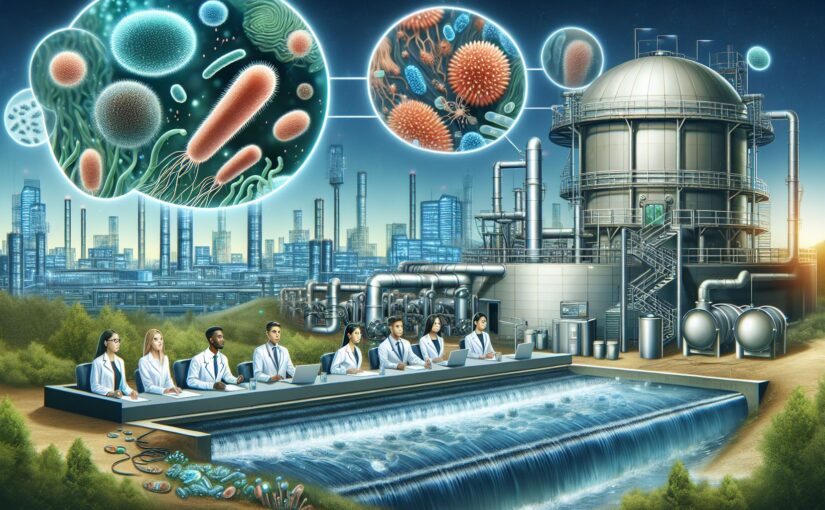
The principle of generating bioelectricity from wastewater is based on the natural process of bacterial metabolism. In environments devoid of oxygen, certain bacteria can transfer electrons to external substances as a part of their metabolic process. This remarkable mechanism can be harnessed through a technology known as Microbial Fuel Cells (MFCs).
Microbial Fuel Cells (MFCs): The Heart of the Process
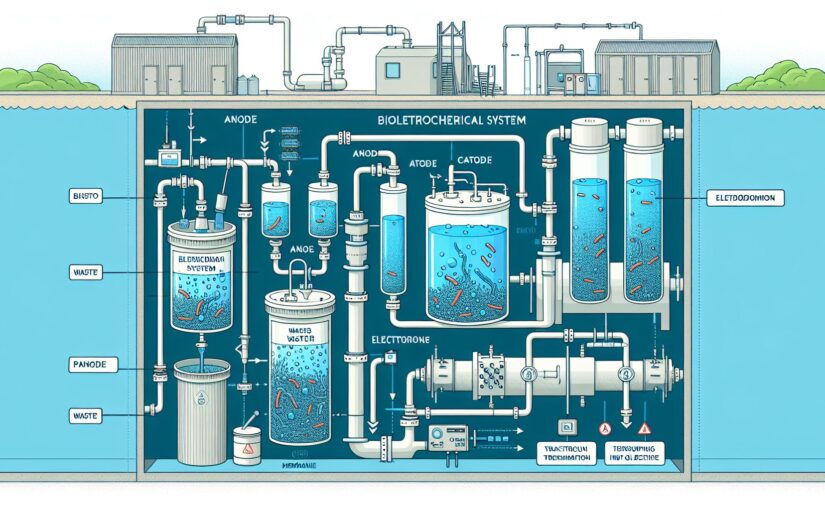
MFCs are bio-electrochemical systems that use bacteria as the catalyst to oxidize organic and inorganic matter, producing electricity in the process. These cells consist of an anode and a cathode compartment, separated by an ion exchange membrane. Electroactive bacteria reside in the anode compartment, where they break down the organic matter found in wastewater, releasing electrons and protons.
Electron and Proton Flow in MFCs
Electrons are transferred from the bacteria to the anode and flow through an external circuit to the cathode, generating an electric current. Meanwhile, protons produced during this biochemical process pass through the ion exchange membrane to the cathode compartment, where they combine with electrons and oxygen (from air) to form water. This efficient electron transfer mechanism not only cleans the wastewater by breaking down pollutants but also creates an electric potential between the anode and cathode that can be harvested for power.
The Dual Benefit: Wastewater Treatment and Energy Production
The most significant advantage of MFC technology is its ability to offer a dual solution – treating wastewater while simultaneously generating electricity. Conventional wastewater treatment plants require substantial energy to operate, often making them one of the largest energy consumers in municipal infrastructures. MFCs can potentially offset this energy demand by producing electricity as they clean the water, leading to a reduction in carbon footprint and operational costs.
Optimizing the Efficiency: Research and Innovations
Researchers are constantly exploring ways to optimize the power output of MFCs and make the technology more viable for widespread use.
-
Electrode Materials: The choice of electrode materials is crucial for maximizing conductivity and the overall efficiency of the fuel cell. While carbon-based electrodes are popular due to their cost-effectiveness and high surface area, there is ongoing research into alternative materials and coatings that offer better conductivity and durability[^1^].
-
Exoelectrogens: The selection of electroactive bacteria, known as exoelectrogens, is equally important. These specialized bacteria have a higher electron transfer rate, which is key to improving the overall electricity generation in MFCs[^2^].
-
System Design: Increasingly, designs such as stacked MFCs and continuous flow MFCs are being developed to enhance the scalability and ease of integration of the system into existing wastewater treatment infrastructure[^3^].
Challenges in Achieving Commercial Viability
Despite the potential benefits, several challenges must be addressed to propel MFCs from the laboratory to widespread commercial application:
-
Power Density and Coulombic Efficiency: Power density and coulombic efficiency are often lower compared to traditional power sources, requiring further research into system optimization to make MFCs competitive.
-
Scaling Up: Scaling up MFCs from small laboratory models to industrial-sized systems is a significant challenge due to complexities in maintaining the ideal conditions for bacterial metabolism and electron transfer over larger volumes of wastewater.
-
Cost: The cost of ion-exchange membranes and electrode materials can be prohibitive, making it necessary to find more affordable alternatives without sacrificing performance.
Looking Forward: The Future of Wastewater-to-Energy Technologies
The journey of transforming wastewater treatment plants from energy consumers to energy producers is promising, though it comes with its set of technical and economic challenges. With ongoing innovation and the development of more efficient and cost-effective MFC designs, this future is becoming increasingly plausible.
One exciting avenue is incorporating wastewater MFCs into smart city designs where wastewater treatment and energy generation could contribute significantly to the sustainability goals of such urban environments. Additionally, the adaptation of these systems in remote areas lacking centralized wastewater treatment could provide sanitation and electricity, improving the quality of life and promoting development.
Public and Private Sector Roles in Advancing MFCs
For MFC technology to advance, collaborative efforts between the public and private sectors are necessary. Government funding can drive research while partnerships with private companies can propel the commercialization of successful prototypes. Incentives for adopting cleaner and more sustainable technologies can also motivate wastewater treatment facilities to invest in MFC systems.
Conclusion
As the need for sustainable practices becomes increasingly urgent, technologies like MFCs that offer renewable energy from wastewater represent a beacon of hope. Not only do they hold the promise of contributing to a more circular economy by turning waste into a resource, but they also support environmental conservation while addressing energy and sanitation needs. The quest for a sustainable and energy-secure future continues, with wastewater MFCs being a key piece of this complex puzzle. It’s an exciting time for scientists, environmentalists, and industry leaders who are all working together to make these innovative solutions a part of our world’s energy portfolio.
Sources:
[^1^]: Logan, B.E., Hamelers, B., Rozendal, R., et al. (2006). Microbial Fuel Cells: Methodology and Technology. Environmental Science & Technology, 40(17), 5181-5192. doi:10.1021/es0605016
[^2^]: Rabaey, K., & Rozendal, R. A. (2010). Microbial electrosynthesis — revisiting the electrical route for microbial production. Nature Reviews Microbiology, 8(10), 706-716. doi:10.1038/nrmicro2422
[^3^]: He, Z., Minteer, S. D., & Angenent, L. T. (2005). Electricity Generation from Artificial Wastewater Using an Upflow Microbial Fuel Cell. Environmental Science & Technology, 39(14), 5262-5267. doi:10.1021/es0502876