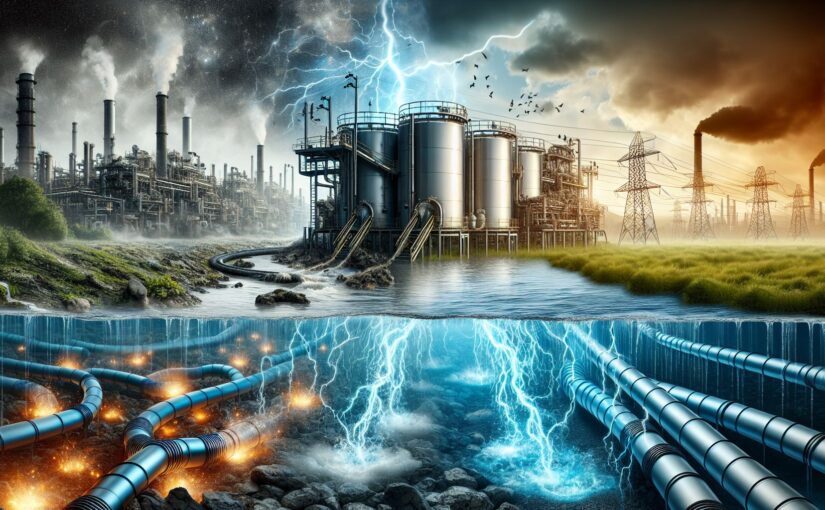
In the contemporary pursuit of sustainability, wastewater treatment is a critical frontier. Traditional wastewater treatment processes can be energy-intensive and less attentive to resource recovery. Yet, the advent of bioelectrochemical wastewater systems (BEWS) paints an eco-friendlier future with the promise of turning waste into wealth. This article delves into the nuances of such systems, exploring its mechanisms, potential, and the pragmatic challenges of implementation.
Introduction to Bioelectrochemical Wastewater Systems
Bioelectrochemical wastewater systems (BEWS) represent an innovative cross-over between biotechnology and electrochemistry. They hold the potential to accomplish two substantial goals: efficient wastewater treatment and the generation of a renewable energy source in the form of bioelectricity. BEWS, more specifically known as Microbial Fuel Cells (MFCs), employ naturally occurring bacteria to catalyze the decomposition of organic matter in wastewater, resulting in the production of electrons that can be harnessed for electricity.
Working Principle of BEWS
The essential components of BEWS include an anode and a cathode separated by a proton exchange membrane. Here is a simplified rundown of the process:
-
Anode Chamber: Wastewater containing organic substrates flows into an anode chamber, where electroactive bacteria adhere to the anode electrode. These organisms, often termed ‘exoelectrogens’, are capable of extracellular electron transfer; they oxidize the organic matter, releasing electrons and protons.
-
Proton Exchange Membrane: The protons diffuse through the proton exchange membrane to the cathode chamber, whereas the electrons travel via an external circuit, establishing an electrical current.
-
Cathode Chamber: In the cathode chamber, the electrons and protons combine with oxygen (or other electron acceptors) to form water, completing the reduction reaction.
This electrochemical process has the dual benefit of treating wastewater and generating bioelectricity, making BEWS a promising technology for sustainable waste management.
Advantages of BEWS
The advantages BEWS offer are manifold:
-
Energy Recovery: Unlike traditional treatment processes which consume energy, BEWS can recover energy from wastewater, reducing the overall energy footprint.
-
Sustainability: BEWS can reduce the emission of greenhouse gases by minimizing the need for energy from fossil fuels and by lowering methane production during the decomposition of organic matter.
-
Low Sludge Production: These systems produce less sludge than conventional wastewater treatments, reducing the cost and environmental impact of sludge disposal.
-
Potential for Resource Recovery: Besides energy, valuable byproducts such as hydrogen and other chemicals can be recovered during the bioelectrochemical process.
Current Challenges
Despite the significant upside, BEWS technologies face numerous challenges that impede widespread adoption:
-
Scaling Up: Laboratory-scale successes often do not translate effectively to larger, real-world applications due to cost, efficiency, and maintenance issues.
-
Power Density: The power density (amount of electrical power produced per unit volume of the reactor) of MFCs is generally low compared to other energy-generating technologies, which limits practical applications.
-
Electrode and Membrane Materials: The development of affordable and efficient electrode and proton exchange membrane materials is crucial for the cost-effectiveness of BEWS.
-
Electron Transfer Mechanisms: Understanding and optimizing electron transfer mechanisms is key to improving the performance of BEWS.
Electron Transfer Mechanisms in Bioelectrochemical Wastewater Systems
One of the cornerstones for improving BEWS is enhancing the electron transfer efficiency between the bacteria and the anode. The primary modes of electron transfer in these systems include:
-
Direct Electron Transfer (DET): Bacteria directly transfer electrons to the anode via membrane-bound proteins known as cytochromes.
-
Mediator-assisted Electron Transfer: Electron-shuttling compounds facilitate the transfer of electrons from bacteria to the electrode. These mediators can be naturally occurring within the biological system or artificially added.
-
Conductive Nanowires: Some bacteria, like strains of Geobacter sulfurreducens, produce nanowire appendages that can efficiently conduct electricity to the anode.
Enhancing these mechanisms through biotechnological innovations and engineering could substantially increase the performance of BEWS.
Electroactive Wastewater Bacteria
The efficacy of bioelectrochemical systems largely depends on the microbial community present in the wastewater. Electroactive bacteria capable of anode respiration play a central role. Studies have shown a diverse variety of bacteria, including genera like Geobacter, Shewanella, and others, thriving in BEWS. Understanding and potentially engineering these microorganisms to boost their electron transfer capabilities could revolutionize BEWS efficiency.
Technology Integration and Future Prospects
Scaling up Bioelectrochemical Wastewater Systems
For BEWS to make a significant impact, the technology needs to scale effectively. Here lies a grand challenge—engineering systems that maintain high efficiency, structural integrity, and cost-effectiveness at a larger scale. Technological innovations, design improvements, and comprehensive modeling must guide efforts to address scale-related challenges.
Renewable Energy from Wastewater
Wastewater is an untapped resource for renewable energy. The decentralization of wastewater treatment coupled with energy recovery can dramatically reshape how we view and manage wastewater. Cities could become hubs of energy production where wastewater treatment plants also function as renewable energy generators.
Policy and Economic Considerations
Successful implementation of BEWS on a broad scale will require supportive policy frameworks and economic incentives. Grants, subsidies, and research funds will spark innovation and hasten the integration of BEWS into mainstream waste management and energy production. Moreover, economic analyses demonstrating long-term savings and environmental benefits will be crucial in convincing stakeholders at all levels.
Conclusion
Bioelectrochemical wastewater systems sit at a compelling crossroads of waste management and renewable energy production. With the development of efficient electron transfer mechanisms, electrode materials, and strategic scale-up practices, BEWS have the potential to redefine the sustainability of our urban infrastructures. Although we have yet to fully realize the technology’s capabilities, ongoing research and innovation promise a greener future where waste is not an endpoint but the beginning of a cycle of renewal.
Further Reading and Resources
For readers interested in diving deeper into the intricacies of bioelectrochemical wastewater systems, the following resources and studies provide valuable insights:
-
Logan, B. E., & Rabaey, K. (2012). Conversion of wastes into bioelectricity and chemicals by using microbial electrochemical technologies. Science, 337(6095), 686-690.
-
Rabaey, K., & Rozendal, R. A. (2010). Microbial electrosynthesis — revisiting the electrical route for microbial production. Nature Reviews Microbiology, 8(10), 706-716.
-
Schroder, U., Harnisch, F., & Angenent, L. T. (2015). Microbial electrochemical technologies: status and prospects. Proceedings of the IEEE, 103(1), 28-39.
By critically analyzing and supporting the ongoing research in bioelectrochemical systems, we can contribute to the wave of sustainable technologies that