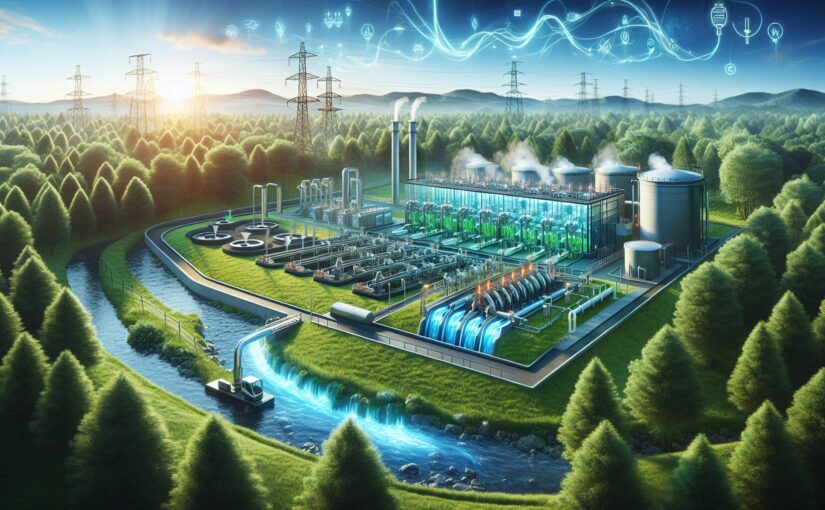
Wastewater treatment often perceived as a burden for the environment due to its high energy consumption, especially in the developed countries where wastewater treatment facilities are widespread. Despite being rich in organic and inorganic components, wastewater treatment plants usually require a high amount of energy to take off those components from the water. However, recent studies have found that wastewater can not only create clean water but also significant amounts of renewable energy. Here we are addressing a new paradigm in wastewater treatment which revolves around renewable energy production.
Research in the field of renewable energy sources from wastewater has recently gained tremendous attention, as this can offer a solution to two crucial issues faced by the world today – wastewater treatment and energy scarcity. At the core of this concept is a technology called Microbial Fuel Cells (MFCs). MFCs utilize microorganisms to convert chemical energy into electrical energy.
Microorganisms present in wastewater can decompose organic matter, in the process releasing electrons. These electrons can be harvested and used to generate electricity. Wastewater thus provides a constant source of renewable energy, reducing the reliance on fossil fuels and making energy production more sustainable.
Furthermore, this innovative technology allows us to “solve two problems at once,” as Prof. Bruce E. Logan, Kappe Professor of Environmental Engineering at Penn State University, comments. “While we’re treating wastewater, why not also generate electricity?”
Besides energy production, this process also reduces the amount of sludge usually produced in classical wastewater treatment, which can further decrease operational costs and environmental problems related to sludge disposal.
Various studies have demonstrated the viability of renewable energy from wastewater. For example, the Journal of Cleaner Production revealed that this system’s use in a small community of 800 people could generate about 836,000 kWh of electricity per year (1).
The potential of renewable energy from wastewater is immense, and as science and technology continues to advance, we can expect this resource to become increasingly crucial in the mission for cleaner, sustainable future. However, challenges remain, such as improving efficiency, to make MFCs a commercially viable option in wastewater treatment facilities (2).
Renewable energy from wastewater is an innovative and promising technology that not only provides a sustainable way to treat wastewater but also contributes to the broader goal of a more sustainable and energy-efficient society.
In the battle against climate change and energy scarcity, technologies like this, that turn waste into a resource, are incredibly valuable and set the stage for a future where waste is not merely a problem, but part of the solution.
Sources:
1. Journal of Cleaner Production
2. Advances in Microbial Fuel Cell for Wastewater Treatment