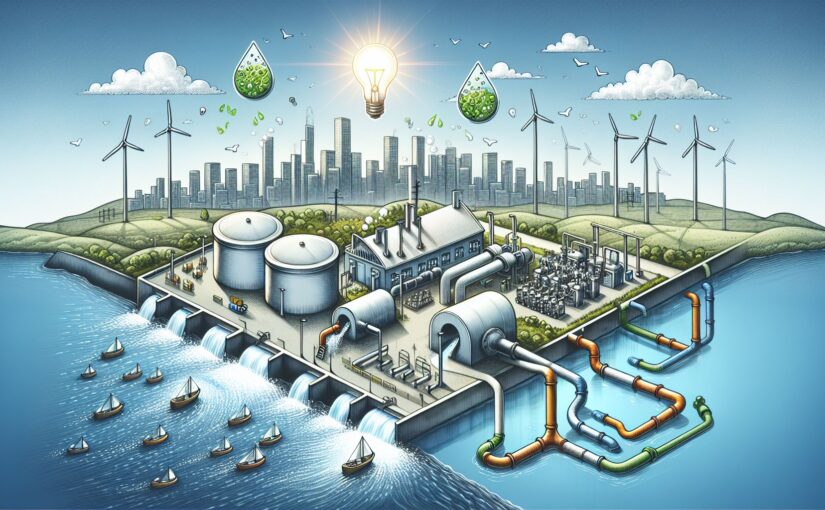
Wastewater is not typically associated with clean energy. For most, it is an unpleasant byproduct of our everyday life that needs to be treated and disposed of properly. But what if we could turn this waste into a source of renewable energy? With the advancement in microbial fuel cells (MFCs), this is not just a hypothetical question—it’s a burgeoning reality. The journey from waste to wattage is an exciting area of research with implications for sustainable development all around the world.
What Are Microbial Fuel Cells (MFCs)?
To understand the process of generating renewable energy from wastewater, we first need to grasp the basic concept of microbial fuel cells. MFCs are bioelectrochemical systems that use bacteria to convert organic substances into electrical energy. These devices operate on the principle of bioelectrochemical conversion enabled by microorganisms, known as electroactive bacteria.
Electroactive Wastewater Bacteria
Electroactive bacteria are the powerhouses behind MFCs. These microorganisms are capable of transferring electrons to an external electrode from the organic matter they metabolize. This electron transfer is the key to the generation of electric current from wastewater.
Electroactive bacteria are broadly classified as exoelectrogens or anode-respiring bacteria, [1] which can live and thrive in the anodic compartment of an MFC. There, they oxidize organic substrates such as those found in wastewater, transferring electrons to the anode, and generating a flow of electricity.
The MFC System: From Wastewater to Power
The typical microbial fuel cell consists of two compartments: the anode and cathode, separated by a proton exchange membrane (PEM). Wastewater, containing organic substrates, flows into the anodic chamber where bacteria degrade the organic substances. During this process, electrons are transferred from the bacteria to the anode, and then through an external circuit to the cathode. At the cathode, electrons, protons (which have passed through the PEM from the anode), and an electron acceptor – such as oxygen in the air – react to form water.
Proton Exchange Membrane in Wastewater MFCs
The role of the proton exchange membrane is to allow protons to pass through while preventing other ions and substrates from mixing between the anode and cathode chambers. This separation is crucial for driving the electrochemical reaction forward. The proton exchange membrane can also be a significant cost factor in MFCs creation, which is why research into reducing costs is pertinent.
Electron Transfer Mechanisms in Winder
Bacteria transfer electrons to the anode by several mechanisms: direct contact, through conductive pili (nanowires), or via soluble electron mediators [2]. Direct transfer involves physical contact between the bacterium and the electrode. Electron shuttles can be naturally occurring compounds or engineered molecules designed to facilitate electron transfer in a process known as mediated electron transfer (MET).
Renewable Energy from Wastewater
The resultant flow of electrons from the anode to the cathode is a stream of electric current that can be harnessed for power. This methodology offers a novel form of renewable energy. Given the continuous generation of wastewater, MFCs can provide a sustainable source of power with the added benefit of wastewater treatment.
Bioelectricity Generation from Wastewater
The phenomenon of generating electricity in this manner is termed bioelectricity. It’s a clean form of energy, and in the context of wastewater treatment, it adds a layer of value to a previously unexplored facet of waste management.
Advantages of Using MFCs for Wastewater Treatment
-
Dual Benefit: MFC technology provides the dual benefit of wastewater treatment and renewable energy production.
-
Reduced Sludge Production: They generate less sludge compared to conventional wastewater treatment processes.
-
Low Energy Requirement: MFCs can operate at ambient temperatures and without aeration, significantly reducing the energy demands.
-
Sustainability: Bioelectricity generated can potentially power the wastewater treatment plant, creating a self-sufficient system.
Challenges and Opportunities
Despite their significant advantages, MFCs also present several challenges. The current drawbacks include:
-
Scaling Up: The transition from lab-scale to large-scale applications is a significant hurdle. [3]
-
Power Density: The power density of MFCs is often not competitive with other renewable energy sources.
-
Cost: Some components, such as the PEM and certain electrode materials, are costly.
However, these challenges open great opportunities for scientific advancement and innovation. Research is aimed at improving the efficiency of these cells, discovering new, cost-effective materials, and creating systems suitable for scale-up and practical application.
Electrode Materials for Wastewater MFCs
A pressing issue with MFCs is finding the right electrode material that is durable, conductive, and cost-efficient. Research has looked into a variety of materials, from carbon-based electrodes which are relatively inexpensive and provide good conductivity, to catalyst-coated electrodes that increase the surface area for bacterial interaction and electron transfer.
Sources:
-
Logan, B. E., & Rabaey, K. (2012). Conversion of Wastes into Bioelectricity and Chemicals by Using Microbial Electrochemical Technologies. Science, 337(6095), 686–690. https://doi.org/10.1126/science.1217412
-
Rabaey, K., & Rozendal, R. A. (2010). Microbial electrosynthesis — revisiting the electrical route for microbial production. Nature Reviews Microbiology, 8(10), 706–716. https://doi.org/10.1038/nrmicro2422
-
He, Z., & Mansfeld, F. (2009). Exploring the use of electrochemical impedance spectroscopy (EIS) in microbial fuel cell studies. Energy & Environmental Science, 2(2), 215–219. https://doi.org/10.1039/B813689G
Generating renewable energy from wastewater using MFCs represents more than just an innovative technological development; it epitomizes a shift towards integrating sustainability into our wastewater management practices. As we develop a deeper understanding and improve the efficiency and scalability of these fuel cells, it’s conceivable that someday our cities will be powered, at least in part, by the very waste they produce. This is a revolution in the making, where every flush isn’t just waste disposal but a small contribution to a cleaner, more sustainable world.