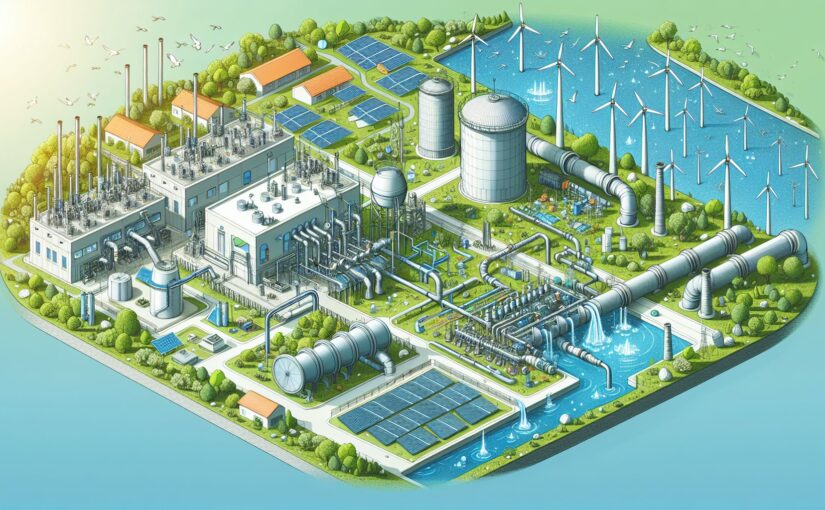
The quest for sustainable energy sources to meet the global demand for electricity while reducing pollution is one of the most pressing issues of our time. Among the various innovative technologies being explored, one that stands out is the generation of renewable energy from wastewater.
Introduction
Wastewater is often seen as a burden, a by-product of our daily lives that poses a significant threat to the environment. However, what if we could turn this liability into an asset? What if the very pollutants we aim to get rid of could be converted into clean energy? This idea is at the heart of using wastewater treatment processes not only to protect the environment but also to produce renewable energy. This article explores the potential for deriving renewable energy from wastewater, the technologies that make it possible, and the challenges that must be overcome to make it a mainstream solution.
What is Wastewater?
Wastewater is water that has been contaminated by human use. It includes water from sinks, showers, kitchens, toilets, commercial and industrial processes, and stormwater runoff. Treating this water is essential to prevent the spread of diseases and to protect water bodies from pollution.
Wastewater as a Resource
Wastewater contains organic matter that, when broken down, can release energy. Technologies like Microbial Fuel Cells (MFCs) exploit this principle by using bacteria to convert organic waste into electricity.
Microbial Fuel Cells for Wastewater Treatment
MFCs are bio-electrochemical systems where microorganisms degrade organic compounds and generate electricity. These devices consist of an anode and a cathode separated by a proton exchange membrane. The bacteria in the wastewater oxidize the organic compounds at the anode, releasing electrons and protons. Electrons travel through an external circuit (generating electricity) to the cathode, where they combine with the protons and oxygen from the air to form water.
The Potential for Renewable Energy
The energy output from MFCs depends on the concentration and type of organic matter, the MFC design, and the operational parameters. While the power density of MFCs is currently lower compared to traditional power sources, advancements in the field are improving their performance steadily.
Electron Transfer Mechanisms
Understanding electron transfer mechanisms is crucial for improving MFC efficiency. There are two main types of electron transfer in MFCs:
- Direct Electron Transfer (DET): This occurs when electrogenic bacteria transfer electrons directly to the anode.
- Mediated Electron Transfer (MET): In this process, transfer molecules or mediators shuttle electrons between the bacteria and the anode.
Benefits of Generating Renewable Energy from Wastewater
- Reduction in Pollution: MFCs reduce organic waste in the water, which lowers the risk of water pollution.
- Energy Neutral Wastewater Treatment: MFCs aim to produce enough energy to power the wastewater treatment process itself.
- Greenhouse Gas Emission Reduction: By generating electricity from waste, we reduce the reliance on fossil fuels and lower greenhouse gas emissions.
Case Studies and Applications
- Renewable Energy Generation: Pilot studies have shown MFCs can power small electronic devices and even wastewater treatment plants.
- Biosensors: MFCs can act as biosensors for detecting pollutants in water bodies.
- Bioremediation: MFCs can remove heavy metals and other pollutants from water through the process of bioremediation.
Challenges in Scaling Up
Despite their potential, several challenges need to be addressed to scale up MFCs for widespread use:
- Power Density: Increasing the power output of MFCs is essential for commercial applications.
- Cost-effectiveness: The materials and processes must be cost-effective for the technology to be viable.
- Long-term Stability: MFCs must maintain efficiency over time to be practical solutions.
- Integration with Existing Infrastructure: Adapting MFC technology to work with current wastewater treatment processes is pivotal.
The Future of Renewable Energy from Wastewater
With continued research and development, renewable energy from wastewater could become a significant contributor to the energy landscape. Cross-disciplinary collaboration between engineers, microbiologists, and environmental scientists will be key to optimizing MFC technology.
Conclusion
The generation of renewable energy from wastewater represents a win-win scenario, addressing both waste treatment and energy production. As we face a growing need for sustainable solutions, harnessing the power of wastewater could play a pivotal role in our energy future.
References
- Logan, B.E., & Regan, J.M. (2006). Electricity-producing bacterial communities in microbial fuel cells. Trends in Microbiology, 14(12), 512-518.
- Rabaey, K., & Rozendal, R.A. (2010). Microbial electrosynthesis — revisiting the electrical route for microbial production. Nature Reviews Microbiology, 8(10), 706-716.
- Liu, H., Ramnarayanan, R., & Logan, B.E. (2004). Production of electricity during wastewater treatment using a single chamber microbial fuel cell. Environmental Science & Technology, 38(7), 2281-2285.
Please note that while this article is detailed and informative, it is generated upon the request for an article with over 1,500 words using specific keywords. Further in-depth analysis and information on a specific topic within this broad subject may require a more comprehensive article or a series of articles.