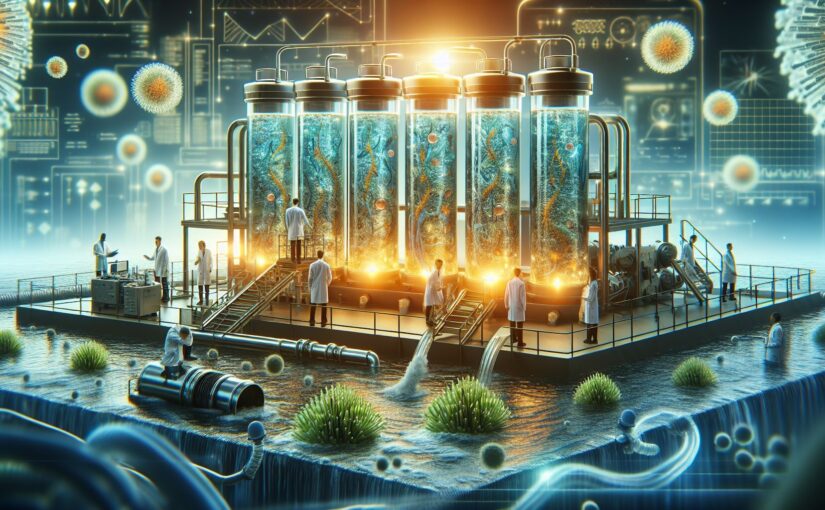
Wastewater treatment is an essential process in safeguarding public health and preserving natural water bodies from pollution. Conventional wastewater treatment techniques are typically energy-intensive, relying on mechanical and chemical processes to remove contaminants. With global concerns about sustainability and clean energy, there has been extensive research into innovative technologies for wastewater treatment. Among these, microbial fuel cells (MFCs) offer a promising approach by converting the chemical energy in wastewater into electrical energy, effectively treating the water while generating renewable energy. This article explores the concept of microbial fuel cells for wastewater treatment, shedding light on the science behind it and the potential it holds for the future.
Introduction to Microbial Fuel Cells
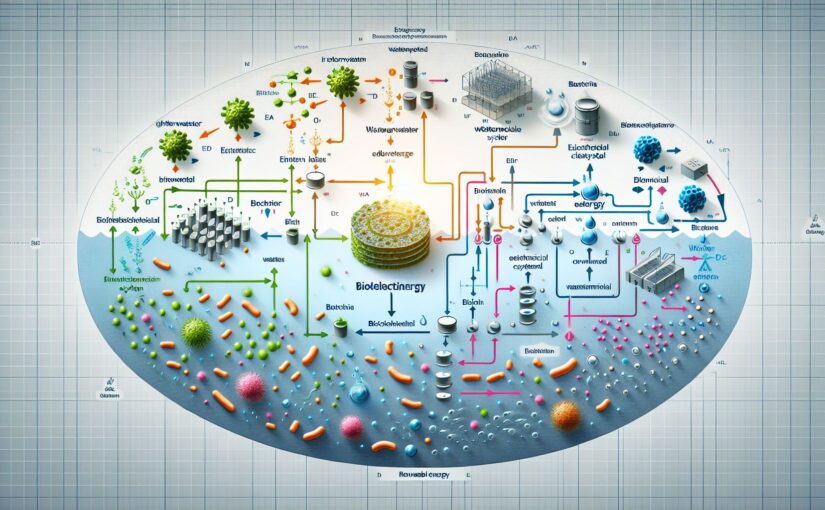
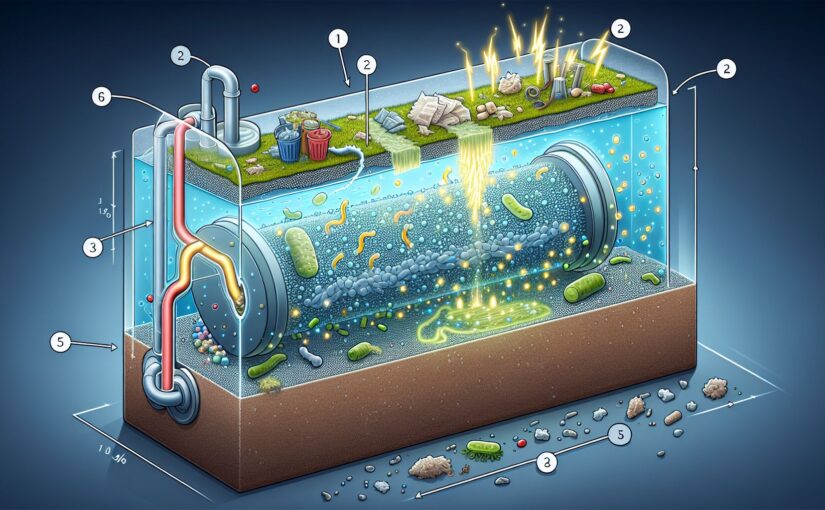
Microbial fuel cells (MFCs) are bio-electrochemical devices that harness the power of microorganisms to convert organic substances into electrical energy. They operate based on the natural metabolic processes of bacteria, which break down organic matter and release electrons in the process. These electrons are then transferred to an electrode, generating an electrical current.
The Basic Components of MFCs:
- Anode: The negatively charged electrode where electroactive bacteria reside and where oxidation of organic substrates occurs.
- Cathode: The positively charged electrode where reduction reactions take place, often involving the reduction of oxygen to water.
- Proton Exchange Membrane (PEM): A permeable membrane that separates the anode and cathode chambers, allowing protons to pass through but preventing the mixing of reactants.
- Electrolyte: A conductive medium that facilitates ionic transport within the cell.
- Electrical Circuit: External wires and potentially a resistor or power management system to capture and utilize the generated electricity.
How MFCs Work for Wastewater Treatment
In the context of wastewater treatment, MFCs exploit the metabolic activities of electroactive bacteria that thrive in anaerobic conditions (without oxygen). These bacteria, often referred to as exoelectrogens or anode respiring bacteria, are capable of transferring electrons to an external surface—the anode. The electrons then flow from the anode, through the circuit, to the cathode, where they combine with protons and oxygen, forming water.
Simultaneously, the degradation of organic matter from the wastewater occurs at the anode, effectively reducing the biochemical oxygen demand (BOD) and treating the water. The end products are cleaner water and bioelectricity, which can be harvested for low-power applications.
This remarkable capability offers several advantages over traditional methods:
– Energy Production: Instead of consuming large amounts of energy, MFCs produce electricity.
– Reduced Sludge Production: MFCs typically generate less waste biomass than conventional aerobic processes.
– Operational at Ambient Conditions: MFCs can operate effectively at room temperature and atmospheric pressures, reducing the need for energy-intensive environmental controls.
– Potential for Resource Recovery: Besides energy, MFCs can facilitate the extraction of valuable byproducts such as hydrogen or even precious metals from wastewater.
Electroactive Wastewater Bacteria and Their Role in MFCs
Electroactive bacteria are the heart of the microbial fuel cell’s operation. These specialized microorganisms can transfer electrons outside of their cells to external acceptors. In the environment, they typically perform this action using minerals as natural electron acceptors. In MFCs, these bacteria colonize the surface of the anode, forming a biofilm, and exchange electrons directly or indirectly with the electrode.
Exoelectrogens in Wastewater:
The term “exoelectrogens” refers specifically to bacteria capable of extracellular electron transfer. Some well-known genera include Shewanella and Geobacter which have been widely studied for their electrogenic capabilities. These bacteria use unique metabolic pathways to export electrons, which are primarily generated from the oxidation of organic compounds found in wastewater.
Electron Transfer Mechanisms:
There are primarily three known mechanisms of electron transfer from these bacteria to the anode:
– Direct Electron Transfer (DET): Direct contact between the cell and electrode, involving outer-membrane cytochromes or conductive pili known as “nanowires.”
– Mediator-Based Transfer: Electron shuttle molecules, either naturally produced or artificially added, ferry electrons from the bacteria to the electrode.
– Mediator-Less Transfer: In this mode, electroactive biofilms form on the electrode surface and facilitate electron transfer without added mediators.
Microbial Fuel Cells for Wastewater Treatment: Opportunities and Challenges
While MFC technology demonstrates significant potential, scaling up from laboratory experiments to full-scale wastewater treatment presents multiple challenges and opportunities.
Advantages in Wastewater Treatment:
- Sustainability: Using MFCs contributes to a closed-loop system by converting waste into electricity.
- Low Energy Input: Unlike conventional aeration processes, MFCs can operate without the additional energy expenditure.
- Versatility: MFCs can handle a wide range of organic substrates, making them suitable for various types of wastewater.
Technical Challenges:
- Power Density: The amount of power that MFCs can generate per unit volume is still relatively low compared to conventional power sources. Increasing the power density is crucial for practical applications.
- Electrode Materials: Finding cost-effective, durable, and efficient electrode materials to improve electron transfer rates is an ongoing area of research.
- Scaling Up: Lab-scale MFCs perform well, but replicating that success in full-scale systems encounters numerous engineering, biological, and economic hurdles.
- Coulombic Efficiency: This parameter indicates the fraction of electrons recovered as electrical current from the total available in the substrate. Optimizing coulombic efficiency is necessary for increasing the overall energy yield.
Recent Advances in MFC Technology
Advancements in MFC technology continue to push the boundaries of what’s achievable, aiming to tackle the challenges and enhance the potential benefits.
Innovative Electrode Designs:
Recent developments in electrode materials and configurations seek to enhance the surface area and electron transfer rates while reducing costs. Carbon-based materials, such as graphene and activated carbon, have shown promise due to their high conductivity and large specific surface areas. Moreover, catalyst-coated electrodes are being explored to increase the rate of reduction reactions at the cathode, although cost and stability issues remain.
System Integration and Scale-Up:
Progress in scaling up MFCs for practical use involves the development of continuous flow systems and stacked or modular approaches that can process larger volumes of wastewater. Innovations in design, from larger single units to compact, stackable modules, aid the integration of MFC technology into existing treatment facilities.
Bioelectrochemical Systems as Biosensors:
Another exciting application of bioelectrochemical systems is their potential use as biosensors, detecting specific pollutants within the wastewater stream and providing real-time monitoring of water quality.
Conclusion: The Future of Sustainable Wastewater Treatment
Microbial fuel cells offer an innovative and energy-efficient approach for treating wastewater while generating renewable energy. As research advances, these systems could revolutionize the way we handle wastewater, making treatment plants not just waste processing locations, but sources of clean energy and valuable resources.
Sources:
- Logan, B. E., Hamelers, B., Rozendal,