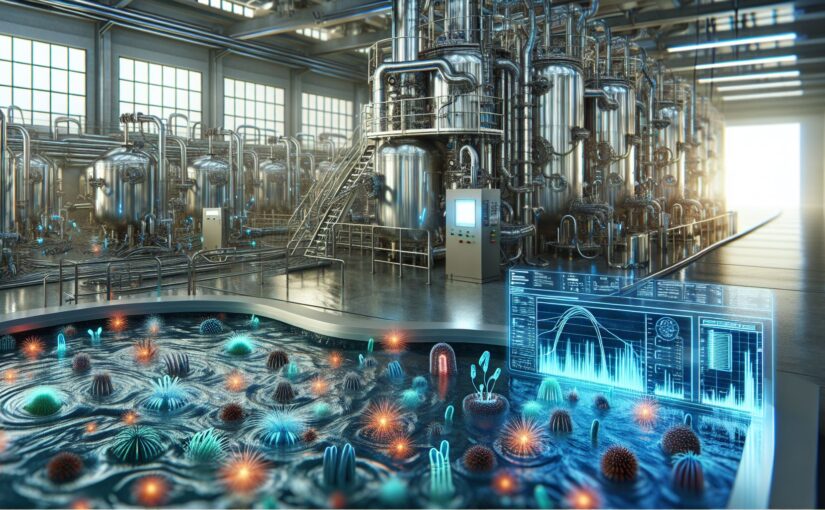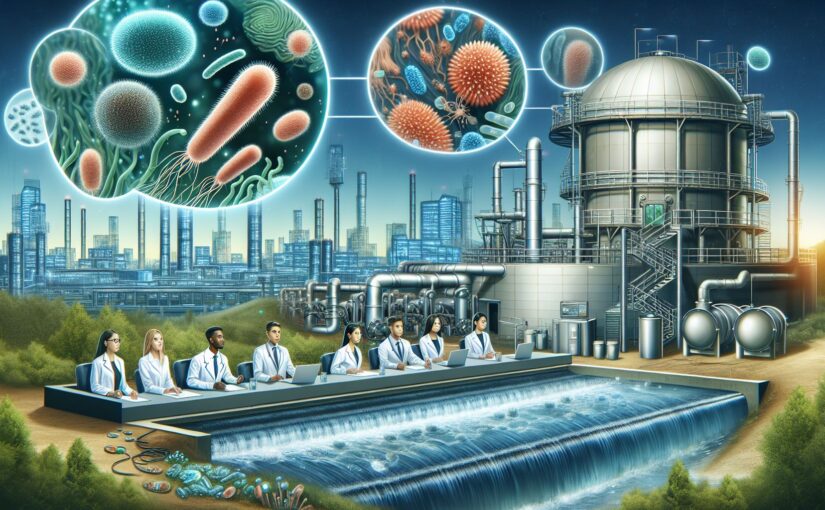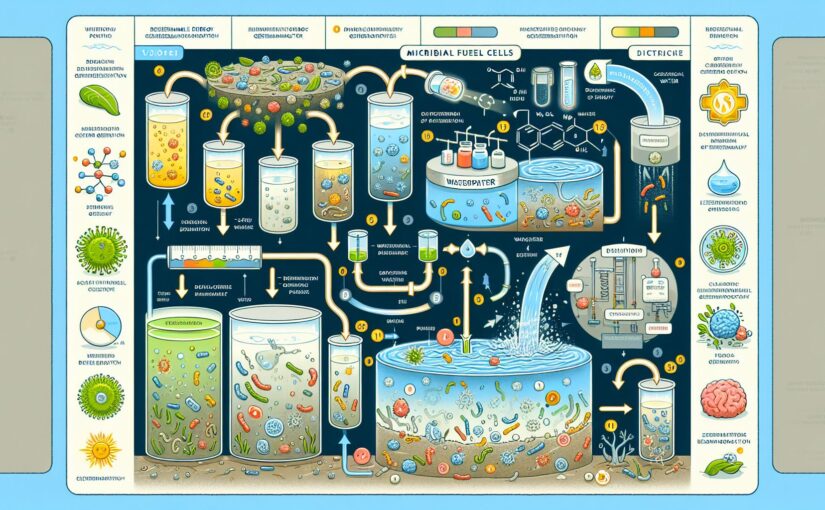
Access to clean water and sustainable energy are among the greatest challenges of the 21st century. As populations grow and the demand for resources rises, the need for efficient wastewater treatment and renewable energy sources becomes ever more pressing. One innovative technology that has the potential to address both issues is microbial fuel cells (MFCs). MFCs can treat wastewater while simultaneously generating bioelectricity, providing a green solution to two critical problems. In this article, we delve into the complexities of generating renewable energy from wastewater through the use of MFCs.
What are Microbial Fuel Cells?
At its core, a microbial fuel cell is a biochemical reactor that harnesses the natural metabolic processes of microorganisms to generate electricity from organic compounds. In the context of wastewater treatment, MFCs utilize the organic matter present in wastewater as fuel to produce bioelectricity, while also cleaning the water in the process.
The MFC Process
A typical MFC consists of two chambers separated by a proton exchange membrane (PEM): the anode and the cathode chamber. In the anode chamber, electroactive bacteria attach to the electrode surface—known as the bioanode—and break down organic matter in the wastewater, releasing electrons, protons (hydrogen ions), and carbon dioxide.
The electrons are then transferred to the anode and travel through an external circuit to the cathode, generating an electric current. Meanwhile, the protons migrate through the PEM to the cathode chamber. In the cathode chamber, the electrons, protons, and oxygen from the air combine to form water.
Advantages of MFCs
MFC technology offers several significant advantages over traditional wastewater treatment and energy production methods:
- Sustainable Energy Production: MFCs produce electricity from renewable biological sources—wastewater containing organic substances.
- Waste Reduction: By converting waste into clean water and electricity, MFCs reduce the burden on the environment.
- Low Operational Costs: MFCs have the potential to operate at low costs since they do not require a significant energy input.
- No Sludge Production: Unlike conventional treatment that produces large volumes of sludge, MFCs minimize waste byproduct.
Challenges in MFC Technology
While MFCs hold great promise, several challenges must be overcome to make them a viable option for large-scale deployment:
- Efficiency: The power output and energy conversion efficiency of MFCs are currently lower than conventional power generation methods.
- Cost: The materials and configurations of MFC components, such as electrodes and membranes, can be costly.
- Scalability: Scaling up MFC technology for industrial applications remains a significant hurdle.
- Durability: Ensuring long-term stable operation of MFC systems requires further development.
Harnessing Energy from Wastewater
Wastewater is an excellent candidate for bioelectricity generation due to its high content of biodegradable organic matter. Electricity generation in an MFC is primarily dependent on the activity of electroactive bacteria that catalyze the oxidation of this organic matter.
Electroactive Wastewater Bacteria
Certain bacteria have the unique ability to transfer electrons outside their cells. These electroactive bacteria, also known as exoelectrogens, play a pivotal role in the efficiency of MFCs. By directly transferring electrons to an electrode, these bacteria facilitate the conversion of chemical energy into electrical energy without the need for expensive and environmentally harmful catalysts.
Electron Transfer Mechanisms in Wastewater
In MFCs, the electron transfer process is a critical step in the generation of electricity. There are two main mechanisms by which bacteria transfer electrons: direct transfer through structures such as pili or nanowires, and indirect transfer via soluble redox mediators secreted by the cells. These processes are key research points in optimizing the efficiency of bioelectricity production in MFCs.
Substrate Degradation
The substrate or fuel for MFCs in wastewater treatment is the organic matter present in the wastewater. The rate of substrate degradation directly influences the efficiency of electricity generation. A high rate of degradation allows for greater and faster energy recovery, making the MFC more effective.
Bioelectricity Generation Techniques
Several types of MFC configurations have been developed to optimize the bioelectricity generation process:
- Mediator-less MFCs: These systems do not require an added mediator (chemicals that facilitate electron transfer), relying on the natural abilities of bacteria to transfer electrons to electrodes.
- Mediator-based MFCs: These systems use external chemicals to improve the electron transfer rate, potentially increasing electricity generation but adding to the cost and complexity.
- Stacked MFCs: To increase power generation, multiple MFC units are connected in series or parallel, creating a stack that can handle larger volumes of wastewater and produce more electricity.
- Continuous Flow MFCs: These systems continuously feed wastewater through the MFC, which can enhance the reactor’s performance and allow for a steady generation of electricity.
Scaling Up and Future Directions
Scaling up MFCs to municipal or industrial levels necessitates advancements in several areas:
- Improving power density and coulombic efficiency to make MFCs competitive with traditional energy sources.
- Developing more cost-effective electrode materials that can reduce the overall cost of MFC systems.
- Creating robust designs that can withstand long-term operation in harsh wastewater environments.
Conclusion
Microbial fuel cells represent a transformative technology that can turn the problem of wastewater management into an opportunity for renewable energy production. With ongoing research and development, MFCs have the potential to play a significant role in our energy and water treatment infrastructure.
By integrating innovations in microbiology, engineering, and materials science, the challenges facing the scalability and efficiency of MFCs are surmountable, thereby paving the path to a more sustainable future.
References
- Logan, B. E. (2008). Microbial Fuel Cells. John Wiley & Sons, Inc.
- Pant, D., Van Bogaert, G., Diels, L., & Vanbroekhoven, K. (2010). A review of the substrates used in microbial fuel cells (MFCs) for sustainable energy production. Bioresource Technology, 101(6), 1533-1543. https://doi.org/10.1016/j.biortech.2009.10.017
- Chae, K. J., Choi, M. J., Lee, J. W., Kim, K. Y., & Kim, I. S. (2009). Effect of different substrates on the performance, bacterial diversity, and bacterial viability in microbial fuel cells. Bioresource Technology, 100(14), 3518-3525. https://doi.org/10.1016/j.biortech.2009.02.065