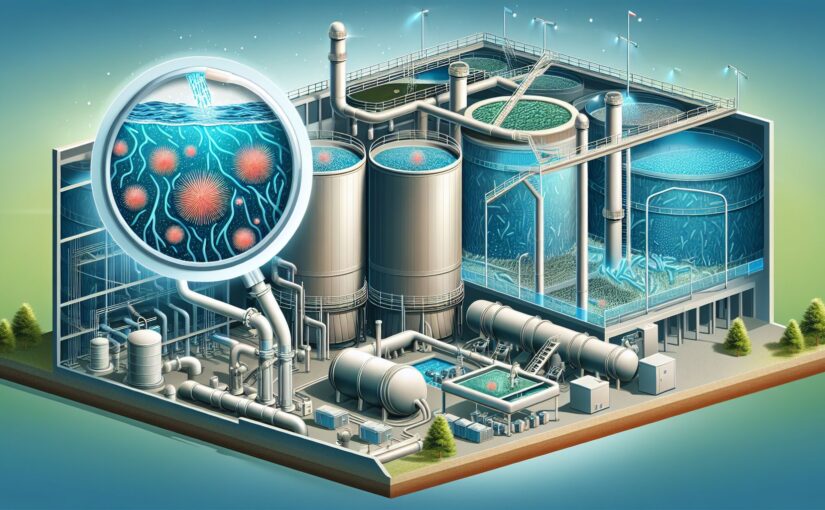
As the global population continues to increase at an unprecedented rate, so too does the production of wastewater and the demand for sustainable energy solutions. Enter microbial fuel cells (MFCs), a groundbreaking technology that not only offers a promising method of wastewater treatment but also an innovative source of clean, renewable energy. This article will delve into the fascinating world of MFCs and their application in wastewater treatment, exploring the principles behind their operation, benefits, and current challenges faced in their implementation.
Introduction to Microbial Fuel Cells
Microbial fuel cells are bio-electrochemical systems that harness the power of microorganisms to convert organic substrates directly into electricity. Essentially, these systems use the metabolic processes of bacteria to catalyze the oxidation of organic and inorganic matter, subsequently producing electrons and protons. This electron flow is captured by an external circuit, translating into an electrical current.
How MFCs Work in Wastewater Treatment
MFC technology is especially appealing for wastewater treatment due to its dual capability of purifying water while generating bioelectricity. Here’s a detailed breakdown of the MFC’s inner workings:
-
Anode Chamber: The wastewater containing organic matter is fed into the anode chamber, where electroactive bacteria (exoelectrogens) oxidize the organic compounds. In this process, electrons are released and transported to the anode surface.
-
Electrode Materials: The type of electrode material plays a crucial role in the efficiency of MFCs. Carbon-based electrodes are often used due to their high conductivity and large surface area, which is conducive to bacterial attachment and electron transfer.
-
Electron Transfer: Electrons flow from the anode to the cathode through an external circuit, creating an electrical current. Meanwhile, protons pass through a proton exchange membrane to the cathode chamber, maintaining charge neutrality.
-
Cathode Chamber: At the cathode, electrons, protons, and oxygen (typically from air) combine to form water. This reaction is often facilitated by catalyst-coated electrodes to increase the reaction rate and overall efficiency of the cell.
Advantages of MFCs in Wastewater Treatment
Renewable Energy Production
One of the most significant benefits of using MFCs for wastewater treatment is their ability to produce bioelectricity. The electricity generated can be used to power on-site processes or ancillary equipment, contributing to the energy-neutrality or even energy-positivity of wastewater treatment facilities.
Sustainable and Eco-Friendly
MFCs represent a sustainable approach to wastewater treatment. They have a low carbon footprint, as they mitigate the emission of greenhouse gases by diverting organic waste from traditional treatment methods, such as anaerobic digesters, which produce methane—a potent greenhouse gas.
Reduction in Sludge Production
Conventional wastewater treatment methods often result in the formation of large amounts of sludge, which require further treatment and disposal. MFCs can reduce sludge production by up to 50%, decreasing the environmental impact and cost associated with sludge management.
Potential in Remote Areas
The self-sustaining nature of MFCs makes them particularly attractive for use in remote or off-grid locations, where traditional energy sources and wastewater treatment facilities are not readily available or cost-effective.
Current Challenges and Areas for Improvement
While MFCs show immense potential, there are several challenges to be addressed:
Power Density and Coulombic Efficiency
Power density (the electrical power generated per unit volume or area of the MFC) and Coulombic efficiency (the proportion of electrons recovered as electricity) are critical parameters determining the practicality of MFCs. Research is ongoing to find ways to enhance both characteristics to make the technology more competitive with conventional power sources.
Scaling Up
Scaling up MFCs from laboratory to industrial scale is a significant challenge due to factors such as increased internal resistance and the complexity of maintaining optimal conditions for bacterial communities. Overcoming these issues is crucial for widespread adoption.
Electrode and Catalyst Costs
The cost of electrode materials and catalysts, particularly those that are catalyst-coated, can be prohibitive. Continued research into affordable and sustainable materials is required to make MFCs economically viable for widespread use.
Wastewater Characteristics
The variability in wastewater composition can affect the performance of MFCs. Identifying robust microbial consortia that can handle diverse and fluctuating wastewater streams is an area requiring further investigation.
Recent Advances
Despite these challenges, recent advancements are paving the way for better MFCs:
Innovative Electrode Materials
Researchers are actively exploring alternative electrode materials, such as conductive polymers and biocomposites, to improve the cost-effectiveness and performance of MFCs. Graphene, for example, has shown promise due to its exceptional conductivity and surface area properties.
Multi-Stage and Stacked Designs
Implementing multi-stage MFCs or stacked configurations can increase the effective surface area for bacterial growth and electron transfer, thus enhancing the power output.
Continuous Flow MFCs
MFCs designed for continuous flow operation can achieve more consistent treatment of wastewater while simultaneously generating electricity, making the technology more suitable for real-world applications.
Conclusion
Microbial fuel cells represent a transformative approach to wastewater treatment, capable of cleaning water and producing renewable energy simultaneously. While there are hurdles to overcome in terms of efficiency, cost, and scalability, ongoing research and innovation are steadily addressing these challenges. The future of wastewater treatment looks promising, with MFCs poised to play a pivotal role in creating more sustainable and energy-efficient processes.
Sources
-
Logan, Bruce E., and John M. Regan. “Microbial fuel cells—challenges and applications.” Environmental Science & Technology 40.17 (2006): 5172-5180. Environmental Science & Technology
-
Pant, Deepak, et al. “A review of the substrates used in microbial fuel cells (MFCs) for sustainable energy production.” Bioresource Technology 101.6 (2010): 1533-1543. ScienceDirect
-
He, Zhen, and Lee F. Zhen. “Microbial fuel cells: now let us talk about energy.” Environmental Science & Technology 42.17 (2008): 6437-6438. Environmental Science & Technology