The convergence of microbiology, environmental engineering, and electrochemistry has given rise to an innovative technology known as bioelectrochemical wastewater systems. These systems are predicated on the capacity of electroactive wastewater bacteria to drive biochemical reactions that can clean water and generate electricity simultaneously. This article delves into the fascinating world of these microscopic powerhouses, exploring their potential to revolutionize wastewater treatment paradigms and provide sustainable energy solutions.
Understanding Electroactive Wastewater Bacteria
Electroactive bacteria are a unique class of microbes with the ability to transfer electrons to external surfaces outside of their cell membranes. In the context of wastewater, these bacteria are instrumental because they can oxidize organic matter and transfer the resulting electrons to an electrode, a process pivotal to the functioning of microbial fuel cells (MFCs).
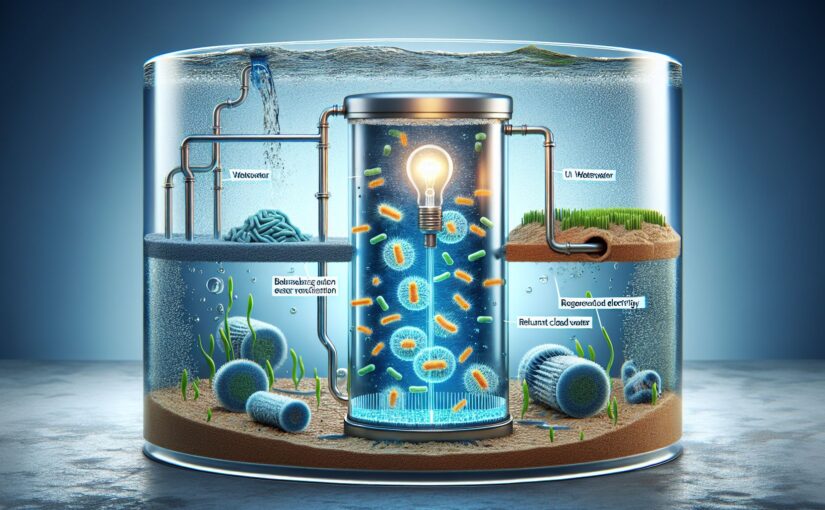
MFCs are bioelectrochemical systems that convert the chemical energy in organic pollutants directly into electrical energy through the catalytic action of microorganisms. These systems are composed of two compartments (an anode and a cathode) separated by an ion-exchange membrane. Electroactive bacteria typically colonize the anode, forming a biofilm and initiating the degradation of organic substrates present in wastewater.
The Role of Exoelectrogens in Wastewater
Exoelectrogens are a subset of electroactive bacteria with a remarkable ability to perform extracellular electron transfer (EET). In wastewater treatment using MFCs, exoelectrogens serve as the biological catalysts at the anode, respiring organic compounds and releasing electrons. These electrons travel through an external circuit to the cathode, where they reduce oxygen to water and, in doing so, generate an electric current.
Anode Respiring Wastewater Bacteria
At the anode of a MFC, respiring bacteria play a crucial role. Anode-respiring bacteria are adept at using the electrode itself as a terminal electron acceptor, a quintessential trait for the bioelectrochemical degradation process. The anode environment selects for these specialized microorganisms, which can efficiently convert diverse kinds of organic pollutants into carbon dioxide, protons, and electrons.
Electron Transfer Mechanisms in Wastewater
Electroactive bacteria employ various strategies for extracellular electron transfer, which can be classified broadly into:
-
Direct Electron Transfer (DET): In DET, bacteria use their conductive pili, also known as bacterial nanowires, or cytochromes embedded in their cell membranes to directly transfer electrons to the electrode surface. This intimate contact allows for efficient electron exchange but requires the bacteria to be in close proximity to the electrode.
-
Indirect Electron Transfer (IET): IET involves the use of soluble redox mediators, which shuttle electrons between the bacteria and the electrode. These mediators can diffuse freely in the solution, allowing for a more flexible setup where bacteria are not constrained to the electrode surface.
Extracellular Electron Transfer in Wastewater
EET’s role in bioelectrochemical systems is pivotal. In wastewater, electroactive bacteria facilitate EET by consuming the organic pollutants and transferring the acquired electrons towards the anode. The efficient execution of EET is a key determinant of the MFC’s overall performance, dictating both the wastewater treatment efficiency and the power output.
Advancements in Electrode Materials for MFCs
The electrode material is a critical component of MFCs because it can significantly influence the attachment and growth of bacterial biofilms, as well as the rate of electron transfer. Researchers have been investigating various materials to enhance the MFC’s performance and economic feasibility.
Carbon-based Electrodes for Wastewater MFCs
Carbon-based materials, like carbon cloth, graphite, and carbon brushes, are popular choices for constructing MFC electrodes due to their high electrical conductivity, large surface area, and relative chemical inertness. Recent advances include the development of three-dimensional carbon nanostructures, which offer an even greater surface-to-volume ratio and potentially higher performance.
Catalyst-coated Electrodes for Warranties
Coating electrodes with catalysts such as metal nanoparticles (e.g., platinum, gold) or conducting polymers can significantly boost electron transfer rates. Though these coatings can improve the MFC’s performance metrics, they often increase costs and may raise sustainability issues, prompting ongoing research into cheaper and more environmentally friendly alternatives.
Scaling up Wastewater MFCs
Transitioning from laboratory-scale to large-scale MFC systems confronts multiple challenges, including maintaining the efficiency of electron transfer mechanisms, constructing cost-effective electrode materials on a larger scale, and integrating MFC technology into existing wastewater infrastructure.
Continuous Flow Wastewater MFCs
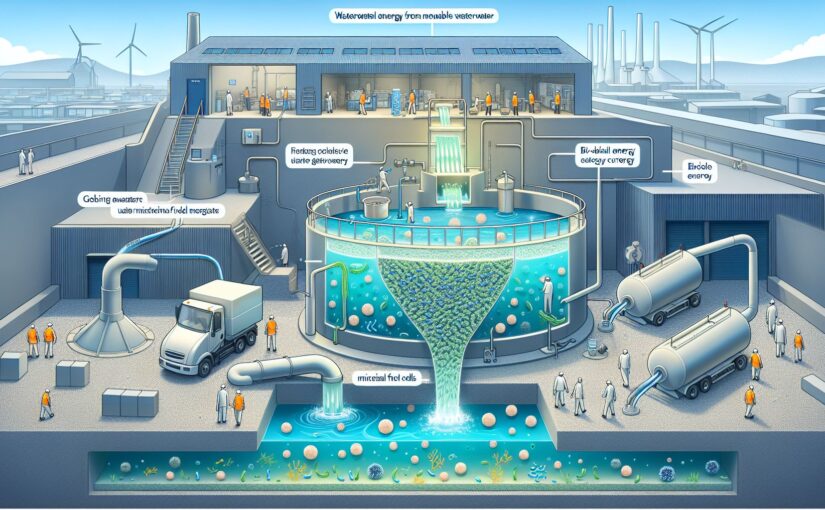
To increase the feasibility of MFCs for practical applications, continuous flow systems have been developed. These systems can handle the larger volumes typical of real-world wastewater treatment plants and facilitate the constant supply of new substrates, improving system stability and performance.
Microbial Fuel Cells for Wastewater Treatment
MFC technology has emerged as a potential game-changer in wastewater treatment, not only for its ability to generate bioelectricity but also for its environmental benefits. By harnessing the inherent energy in wastewater, MFCs offer a double benefit: purification of polluted water and conversion of waste to watts.
Renewable Energy from Wastewater
The quest for renewable energy sources has drawn significant attention to MFCs due to their capability to generate electricity from the oxidation of organic matter. The integration of MFCs into wastewater treatment plants could offset operational costs by providing a portion of the energy required to run the facilities.
Bioelectricity Generation from Wastewater
While the current power outputs of MFCs are relatively low compared to conventional power sources, ongoing research is aimed at increasing the efficiency and energy recovery of these systems. Key factors such as power density, coulombic efficiency, and understanding the polarization curve inherent in wastewater MFCs are crucial for improving performance.
Future Perspectives and Challenges
As research progresses, the prospects of scaling up wastewater MFCs become more tangible. Innovative designs such as stacked MFCs, where multiple units are connected to enhance voltage and power output, represent important strides forward. Moreover, emerging technologies like sediment MFCs and plant-microbial fuel cells further expand the scope of application to varied environments and provide additional pathways for energy recovery from wetlands and agricultural settings.
Another exciting development is the combination of MFS with other bioelectrochemical systems, such as microbial electrolysis cells, which can produce hydrogen gas, or microbial desalination cells, which can remove salt from saline waters while generating energy.
Yet, significant hurdles remain. The development of affordable and scalable reactors, optimizing wastewater treatment efficiency, and improving energy conversion rates are key challenges that need to be addressed. Continuous innovation in electrode design, advancements in understanding the microbial ecology of these systems, and the creation of effective consortiums of electroactive bacteria will shape the trajectory of MFC technology.
Conclusion
Electroactive wastewater bacteria stand at the core of a technology with the potential to transform waste into a resource. The intricate electron transfer mechanisms they employ offer insight into a future where wastewater treatment might be coupled with renewable energy production. While substantial obstacles remain, the relentless pursuit of effective bioelectrochemical systems will remain integral to sustainable water management and energy conservation.