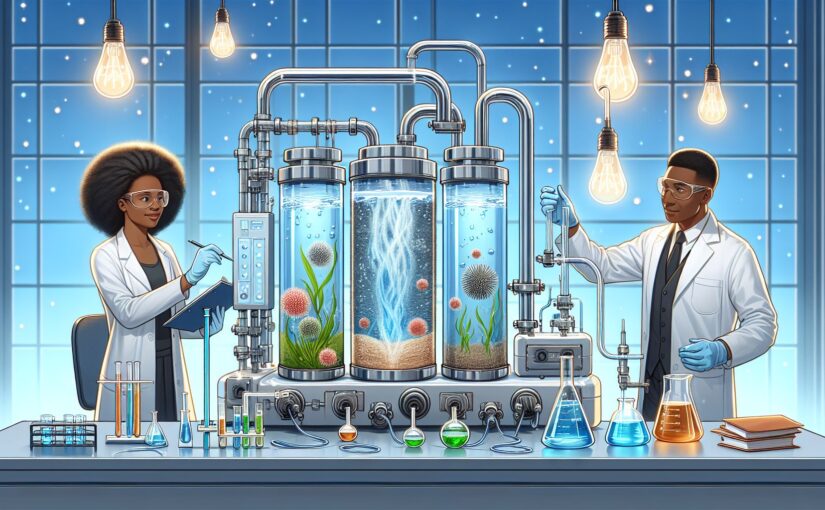
The world is currently facing two critical challenges: the growing demand for clean water and the urgent need to switch to renewable energy sources. Traditional methods of wastewater treatment are energy-intensive and can have significant environmental footprints. However, an innovative technology called Microbial Fuel Cells (MFCs) offers a glimmer of hope by addressing both of these issues simultaneously. In this article, we will delve into the role of Microbial Fuel Cells for wastewater treatment, discussing how they operate, their advantages, potential applications, and the challenges that need to be overcome to make this technology mainstream.
Introduction to Microbial Fuel Cells
Microbial Fuel Cells (MFCs) are bio-electrochemical systems that harness the power of bacteria to convert organic matter in wastewater into electricity. By exploiting the natural processes of bioelectrochemical wastewater systems, MFCs offer a dual benefit: they clean wastewater while generating bioelectricity, making it a promising technology for sustainable wastewater treatment.
Principles of Operation
MFCs consist of two chambers: an anode and a cathode, separated by a proton exchange membrane (PEM). Electroactive wastewater bacteria, often referred to as exoelectrogens, feed on the organic matter present in wastewater at the anode chamber. As these bacteria metabolize the substrate, they generate electrons and protons. The electrons travel through an external circuit to reach the cathode, generating an electric current, while the protons move through the PEM to the cathode. At the cathode, the protons, electrons, and oxygen from the air combine to form water, thereby completing the circuit.
markdown

Anode reaction: Organic matter + Bacteria -> CO2 + H+ + e-

Cathode reaction: O2 + H+ + e- -> H2O
Advantages of MFCs
MFCs provide several compelling advantages:
- Sustainable wastewater treatment: They treat wastewater without the need for additional energy input.
- Renewable energy production: MFCs produce bioelectricity, contributing to the renewable energy mix.
- Low sludge production: They generate less waste biomass compared to conventional treatment processes.
- Resource recovery: Potentially valuable byproducts like hydrogen gas or clean water can be extracted from the process.
The Role of Bacteria in MFCs
Bacteria in MFCs serve as the catalysts for the electrochemical reactions. Anode-respiring bacteria are capable of transferring electrons to the anode surface, a process termed extracellular electron transfer (EET). This trait is exploited in MFCs to initiate the flow of electricity.
Electron Transfer Mechanisms
The mechanisms for electron transfer include:
- Direct transfer: Bacteria attach to the anode and transfer electrons directly through membrane-bound proteins or cytochromes.
- Mediated transfer: Shuttle molecules or mediators transfer electrons between bacteria and the anode. There are two types:
- Mediator-less MFCs, which rely on the inherent capabilities of bacteria to transfer electrons.
- Mediator-based MFCs, which utilize added compounds to facilitate electron transfer.
Exoelectrogens in Wastewater
These special bacteria are key to MFC function. Common examples include Shewanella oneidensis and Geobacter sulfurreducens. Both are capable of oxidizing organic substrates while reducing solid-state electron acceptors like metal oxides or electrode materials.
Components of MFCs
Anode Chamber
The anode chamber houses the bacteria and the wastewater substrate. It is where the degradation of organic matter occurs. Bioanodes are critical as they must effectively capture the bacteria-produced electrons.
Cathode Chamber
The cathode chamber is typically exposed to air, permitting oxygen to serve as the final electron acceptor. Wastewater biocathodes are also being explored, where bacteria reduce nitrates or other substances.
Proton Exchange Membrane (PEM)
The PEM is essential for ion conduction while preventing direct mixing of the reactants in both chambers. Selective membranes allow protons to move towards the cathode but block other molecules, maintaining a separation between the solutions.
Electrodes
Electrodes are made from materials that facilitate electron transfer. Carbon-based electrodes are popular due to their conductivity and biocompatibility. Advanced materials and catalyst-coated electrodes aim to improve the efficiency and power output.
Optimization and Challenges
For MFCs to become widely adopted, several challenges must be addressed.
Power Density and Efficiency
The power density in wastewater MFCs is often low, limiting practical applications. Enhancing the electrogenic capabilities of bacteria and improving electrode materials are vital strategies. Coulombic efficiency, which indicates the fraction of electrons used for current generation versus those lost to other processes, is another crucial factor for optimization.
Up-scaling and Design
While lab-scale MFCs show promise, scaling up to industrial or municipal levels is complex. Continuous flow wastewater MFCs, stacked and sediment MFCs have shown potential for larger-scale operations.
Cost and Durability
The cost of electrode materials and PEMs can be prohibitive. Finding cheaper, sustainable materials and designs that can withstand long-term operation in wastewater conditions is necessary for economic viability.
Future Directions and Applications
- Renewable energy generation: A significant goal is to enhance the energy output to make the process self-sustaining or even net energy positive.
- Bioremediation: MFCs can be designed to target specific pollutants, aiding in more focused bioremediation efforts.
- Biosensors: The sensitivity of bacteria to their environment means MFCs can potentially serve as sensors for wastewater quality.
- Desalination: Microbial desalination cells can extract salts, contributing to the field of water purification.
Conclusion
Microbial Fuel Cells harness the dual potential of providing a new avenue for renewable energy while addressing wastewater treatment challenges. As research progresses, the integration of MFC technology into existing infrastructure increasingly becomes a feasible and attractive proposition for a future with cleaner water and energy.
Sources
- Logan, B. E. (2008). Microbial Fuel Cells. John Wiley & Sons.
- Pant, D., Van Bogaert, G., Diels, L., & Vanbroekhoven, K. (2010). A review of the substrates used in microbial fuel cells (MFCs) for sustainable energy production. Bioresource Technology, 101(6), 1533-1543. DOI: 10.1016/j.biortech.2009.10.017
- Rabaey, K., & Rozendal, R. A. (2010). Microbial Electrosynthesis — Revisiting the Electrical Route for Microbial Production. Nature Reviews Microbiology, 8(10), 706-716. DOI: 10.1038/nrmicro2422
Using MFCs for wastewater treatment not just a promising technology; it’s a forward-thinking approach that seeks to turn waste into a resource, fitting neatly into circular economy models. With ongoing research to tackle the remaining challenges, MFCs may soon become an essential