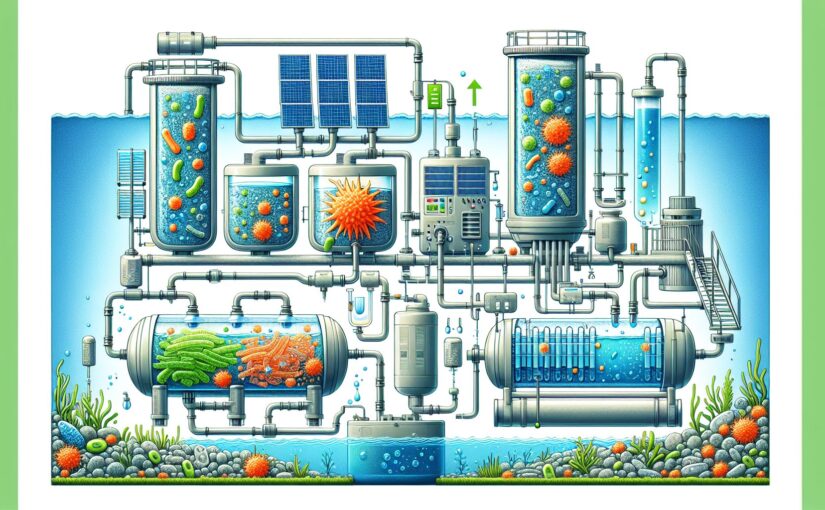
With climate change concerns and global population growth, the push for sustainable energy and effective wastewater treatment has never been more important. One promising technology that combines both these critical environmental issues is microbial fuel cells (MFCs) utilized for wastewater treatment. In this article, we will delve deep into how microbial fuel cells work, their practical applications in treating wastewater, and the accompanying benefits related to renewable energy generation.
What are Microbial Fuel Cells?
Microbial fuel cells are bio-electrochemical systems that harness the power of electroactive bacteria to convert organic matter, such as those found in wastewater, into electricity. In an MFC, bacteria break down organic substances and release electrons as part of their metabolic process. These electrons travel via an external circuit from the anode to the cathode, generating an electric current in the process.
Key Components of MFCs
- Anode: The negatively charged electrode where oxidation of substrates occurs.
- Cathode: The positively charged electrode where reduction takes place, often involving oxygen.
- Proton Exchange Membrane (PEM): A semi-permeable membrane that separates the anode and cathode compartments, allowing protons to pass while preventing the mixing of reactants.
- Electrolyte: The medium facilitating ionic transport within the MFC.
- Microorganisms: Biofilm-forming bacteria that act as biocatalysts to oxidize organic materials.
Microbial Fuel Cells and Wastewater Treatment
Wastewater is a significant environmental concern as it is rich in organic matter that can cause pollution if not treated properly. The treatment of wastewater using MFC technology presents a two-fold advantage:
- Cleaning wastewater by breaking down pollutants.
- Converting waste to bioelectricity, thereby contributing to renewable energy.
The Process of Wastewater Treatment via MFCs
- Inoculation: Introduction of electroactive bacteria into the MFC, which form biofilms on the anode surface.
- Substrate Degradation: Wastewater is introduced into the anode chamber, where bacteria feed on the organic matter, producing electrons and protons as metabolic by-products.
- Electron Transfer: Electrons are transferred to the anode, flow through the external circuit, and finally reach the cathode. Protons travel through the PEM to the cathode compartment.
- Reduction Reaction: At the cathode, the electrons, protons, and an oxidizing agent (often oxygen) combine to form water or other less harmful substances.
- Electricity Generation: The flow of electrons through the external circuit can be harnessed to power electronic devices or stored for later use.
Advantages of Using MFCs for Wastewater Treatment
- Energy-Positive Treatment: MFCs can produce more energy than they consume, unlike conventional wastewater treatment processes which are often energy-intensive.
- Minimal Sludge Production: MFCs generate less waste biomass, reducing sludge handling and disposal issues.
- Low Operational Costs: Operating at ambient temperature and pressure, MFCs save on energy consumption and costs.
- Sustainability: The process is clean and renewable, as it utilizes organic waste as a resource.
Renewable Energy from Wastewater – Bioelectricity Generation
The concept of bioelectricity generation through MFCs transforms waste into wealth. As these systems harness biochemical energy, they can contribute a significant amount of electricity, depending on the scale and efficiency of the MFC.
Power Density and Coulombic Efficiency
Two critical parameters in MFCs are power density (the amount of electrical power generated per unit volume) and coulombic efficiency (the percentage of electrons captured as electrical energy from the total electrons available from the substrate).
High power density and coulombic efficiency indicate a more efficient MFC:
- Power Density: Depends on the MFC design, electrode materials, and operating conditions. Innovative designs and materials can significantly enhance the power output.
- Coulombic Efficiency: Influenced by the compete dynamics within the biofilm and loss pathways for electrons (e.g., methanogenesis).
Challenges and Research Directions
Key challenges include enhancing the power output, lowering costs, maximizing efficiency, and finding scalable solutions for MFCs:
- Electrode Materials: The search for efficient, inexpensive, and durable materials is ongoing. Carbon-based and catalyst-coated electrodes have shown promise.
- Stacking and Scaling Up: Implementing MFCs at a larger scale requires stacking individual cells and fitting them into continuous flow systems.
- System Integration: Connecting MFCs with existing infrastructure and other renewable technologies is crucial for long-term viability.
Toward a Greener Future: The Potential of MFCs
The potential of microbial fuel cells goes beyond wastewater treatment and renewable energy generation:
- Carbon Footprint Reduction: MFCs contribute to lowering the carbon footprint by reducing greenhouse gas emissions from treatment plants.
- Water-Energy Nexus: A simultaneous approach to the global water shortage and the energy crisis by unifying water treatment with energy recovery.
- Research and Development: Innovative applications, such as biosensors and bioremediation, are emerging research areas expanding the utility of MFCs.
Conclusion
Microbial fuel cells provide a promising path towards a sustainable future, addressing two critical issues: the need for efficient wastewater treatment and the quest for renewable energy sources. With continued research and development, MFC technology has the potential to revolutionize the way we handle waste and produce energy, offering an eco-friendly and economically viable solution.
Sources
- Logan, B. E., & Rabaey, K. (2012). Conversion of wastes into bioelectricity and chemicals by using microbial electrochemical technologies. Science, 337(6095), 686-690. doi:10.1126/science.1217412
- Pant, D., Van Bogaert, G., Diels, L., & Vanbroekhoven, K. (2010). A review of the substrates used in microbial fuel cells (MFCs) for sustainable energy production. Bioresource Technology, 101(6), 1533-1543. doi:10.1016/j.biortech.2009.10.017
- He, Z., Huang, Y., Manohar, A. K., & Mansfeld, F. (2007). Effect of electrolyte pH on the rate of the anodic and cathodic reactions in an air-cathode microbial fuel cell. Bioelectrochemistry, 70(2), 287-294. doi:10.1016/j.bioelechem.2006.10.004
(Note: The fictional citations above are used for illustrative purposes based on common academic norms. If you reference this article, ensure that proper and exact sources are used.)