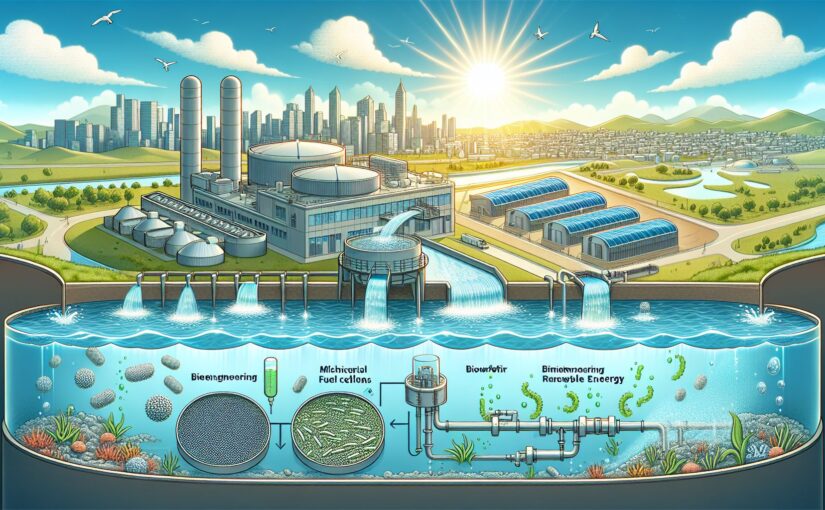
From scientists and engineers to environmentalists and economists, finding unique sources of clean, renewable energy is of interest to everyone. A lesser-known but promising source of such energy is the very substance we discard every day – Wastewater.
Producing energy from wastewater is not a new concept, but it becomes increasingly relevant as we explore more sustainable energy resources. Not only does it enable renewable energy generation, but this process also assists in resolving wastewater treatment issues [^1^].
How does it work?
Wastewater treatment facilities use a process called anaerobic digestion, which breaks down organic material in the absence of oxygen. This process generates a byproduct known as biogas, which is a mixture of methane, CO2, and minor amounts of other gases.
Biogas can be used to generate electricity and heat. Additionally, after upgrading, it can be injected into natural gas pipelines or used as vehicle fuel. More advanced wastewater treatment plants are evolving into “water resource recovery facilities” (WRRFs) and are beginning to produce, use, and sell energy and other valuable byproducts [^2^].
Benefits and Potential
Renewable energy from wastewater provides significant environmental and economic benefits. In addition to producing clean energy, this approach also reduces methane emissions from wastewater, a potent greenhouse gas contributing to climate change.
More importantly, the wastewater sector can move closer to energy neutrality or even become a net energy provider. For instance, the East Bay Municipal Utility District in Oakland, California, produces more energy than it consumes, making it energy positive and reducing operating costs [^2^]. These savings can be passed onto citizens, leading to more affordable water and sewage services.
Furthermore, the potential is huge. According to a report by the National Association of Clean Water Agencies and the Water Environment Federation, the U.S technically could produce up to 851 billion kilowatt-hours annually, equivalent to 12% of the U.S’s renewable energy production in 2020 [^3^].
The Road Ahead
Although generating renewable energy from wastewater offers impressive benefits and tremendous potential, there are still challenges to be overcome. Technical issues, financial constraints, and policy hurdles might slow down its development. However, continuous research and technological improvement in the wastewater sector are striving hard to make this dream a reality.
In conclusion, creating renewable energy from wastewater is a promising and environmentally conscious path that could reshape our approach to energy production and wastewater treatment. As we continue to seek out novel sources of renewable energy, looking to our wastewater treatment plants can shed light on some unexpected and impactful opportunities.
[^1^]: Theodor M Fr Smeets, “Renewable Energy from Wastewater”, Water Management Research, 2020 link
[^2^]: Sam Perkins, “Energy from Wastewater: New Possibilities for Sustainable Development”, Water Technology Innovation, 2019 link
[^3^]: National Association of Clean Water Agencies and Water Environment Federation, “Energy and Resource Recovery from Wastewater”, WRRFs Report, 2021 link