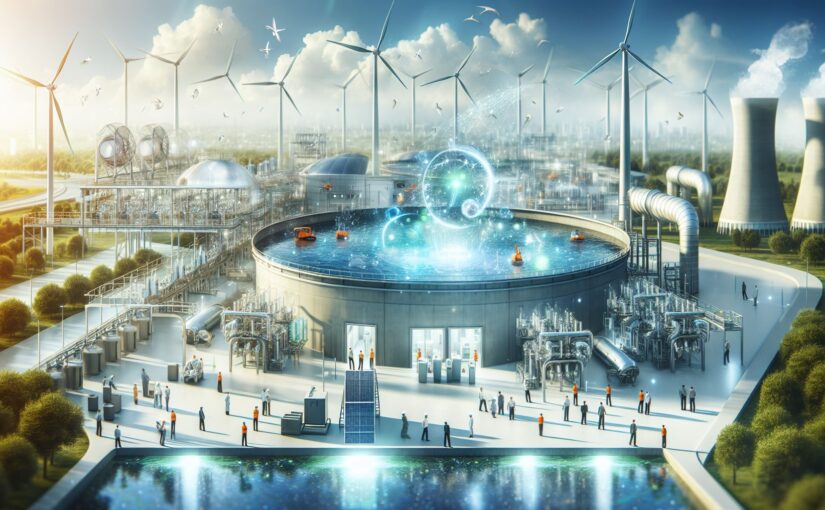
With the increasing concerns for our environment and depletion of traditional energy resources, the search for renewable energy sources has never been so vital. One unique and transformative approach to this dilemma lies in an area commonly overlooked – wastewater. Yes, you read that right; transforming wastewater into renewable energy is no longer simply a vision for the future; it is a reality happening right now in many innovative wastewater treatment plants worldwide.[^1^]
The Role of Wastewater in Renewable Energy Generation
Waste, especially wastewater, is an abundant resource available in every nook and corner of urban and rural environments. It contains organic materials that, when treated properly, can be transformed into energy. This procedure not only serves to generate power but also solves sanitation and pollution problems.
Microorganisms play a vital role in this process. They break down the organic matter in the wastewater through anaerobic digestion, producing biogas—a mixture of methane (CH4) and carbon dioxide (CO2). The collected biogas, which is combustible, can be utilized to generate heat and electricity in a combined heat and power system (CHP). With advancements in technology, a growing number of wastewater treatment plants are transitioning to this eco-friendly, energy-generating approach.[^1^][^2^]
Benefits
By investing in wastewater-to-energy conversion technologies, we can mostly prevent methane, a potent greenhouse gas, from escaping into the environment, which is a common occurrence in conventional wastewater treatment plants. Moreover, the process delivers a dual advantage—energy production and waste reduction. It offers a climate-friendly solution by assisting in the reduction of carbon emissions while simultaneously producing a renewable source of energy.
Innovations and Potential Challenges
Given the technological advancements, more methods are now emerging for generating energy from wastewater. Microbial fuel cells (MFC), for instance, can convert chemical energy to electrical energy by using bacteria. This technology not only improves the economics of wastewater treatment but also promotes a circular economy where waste is considered a resource. As promising as this may seem, there are challenges. The technologies are still at the developmental stage, with efficiency, scalability, and costs being major concerns.[^3^]
Looking to the Future
The concept of extracting renewable energy from wastewater holds great potential for the future. With concerted efforts towards advanced technical research and the establishment of regulations that encourage investments, it is possible to fully utilize this untapped resource.
This approach of using the problem as a solution is the way forward towards sustainable development.
So, the next time you flush the toilet, remember, you’re not just disposing of waste; you’re potentially contributing to the production of renewable energy!
[^1^]: U.S. Environmental Protection Agency