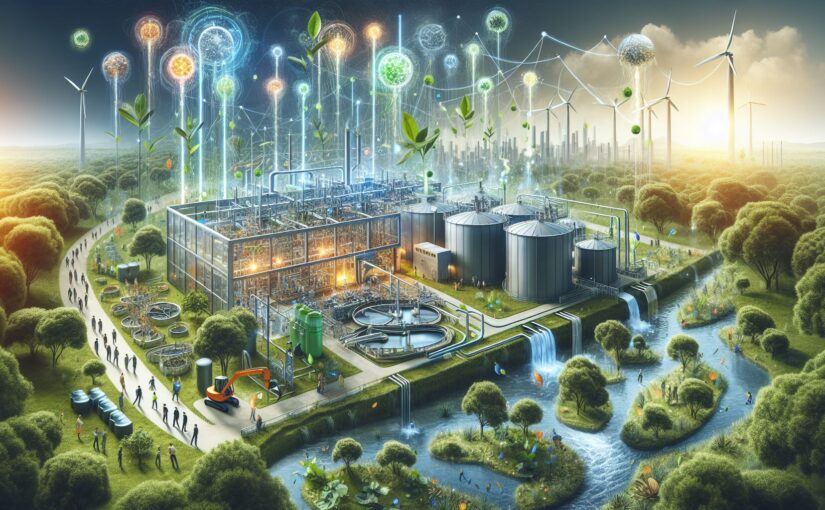
Harnessing renewable energy is no longer a novel concept; it’s no longer about just solar panels or wind turbines. An exciting and innovative channel has emerged in recent years- the energy potential harnessed from wastewater. This unconventional renewable energy source presents not just a solution for renewable energy but also wastewater treatment.
Wastewater: An Untapped Goldmine
Every day, millions of gallons of wastewater are produced. The premise is simple – if we could convert even a fraction of the potential in wastewater to electrical energy, it would contribute significantly towards meeting energy demands. According to studies, the energy potential from global wastewater treatment could theoretically meet more than 10% of the world’s energy needs[^1^].
How Does it Work?
The science behind deriving renewable energy from wastewater is based on Microbial Fuel Cells (MFCs). MFCs use the natural biological process of bioelectrochemical systems to convert organic matter into electricity. They function by harnessing the power of electroactive bacteria that can transfer electrons produced during the degradation of organic matter directly to an electrode.
These bacterial “micro batteries” essentially eat the waste and spit out electrons. These electrons are captured on electrodes and transferred through a circuit, resulting in electric power[^2^].
The Benefits
The pros of this approach are manifold. Firstly, it presents a very effective form of wastewater treatment process. Secondly, it aids in the crucial drive towards renewables by generating electricity. This reduces dependency on traditional energy sources and makes for a much cleaner and greener power source.
Conclusion
Deriving renewable energy from wastewater holds enormous potential. Its development is a win-win situation, combining green energy generation with effective waste management. As we continue to aim for a sustainable future for energy, wastewater could very well become a normal and regular provider of clean, renewable power.
While more extensive research and development are needed to optimize the process and make it economically viable for large-scale production, the initial findings, results, and potential benefits offer promising hope for both the energy sector and environmental conservation.
Let’s keep tapping into this golden wastewater and encourage more research and investments in this field. The time for sustainable and innovative renewable energy solutions is now!
References:
[^1^]: McCarty, P. L., Bae, J., & Kim, J. (2011). Domestic wastewater treatment as a net energy producer–can this be achieved?. Environmental science & technology, 45(17), 7100-7106.
[^2^]: Logan, B. E., & Rabaey, K. (2012). Conversion of wastes into bioelectricity and chemicals by using microbial electrochemical technologies. Science, 337(6095), 686-690.