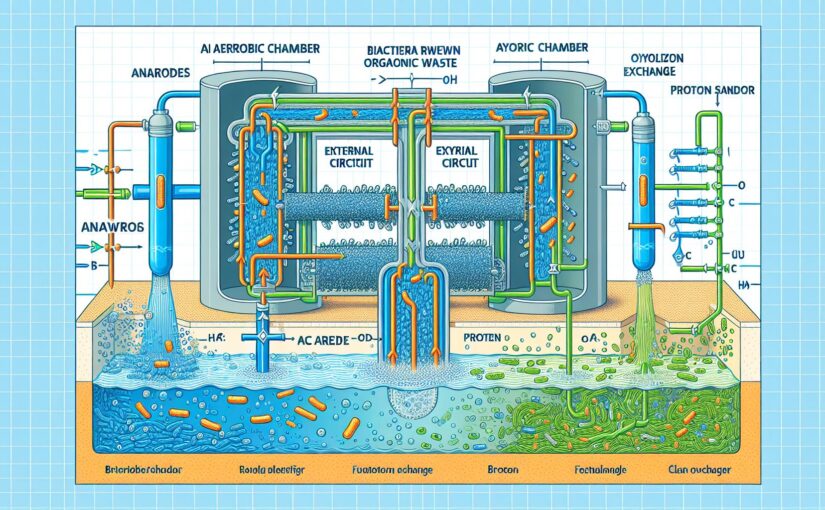
At first glance, a microbial fuel cell may sound like something out of a science fiction movie. However, this cutting-edge, eco-friendly technology offers a practical and sustainable solution for treating wastewater, and provides a renewable source of energy too!
The Basics: How Do Microbial Fuel Cells Work?
In layman’s terms, microbial fuel cells (MFCs) are devices that use bacteria to convert organic waste matter into electricity. Cells are populated with a special group of bacteria known as exoelectrogens. These exoelectrogens function by breaking down organic waste material and, as they metabolize, they generate electrons. The microbial cells take advantage of this process, harnessing these electrons to generate an electrical current [1].
Potential Benefits of Using MFCs in Wastewater Treatment
Microbial fuel cell technology is essentially a two birds-one stone solution that simultaneously addresses the growing need for affordable wastewater treatment options along with the demand for renewable energy. Given the increasing worldwide need for both, the potential benefits of this innovative technology cannot be underestimated.
Environmental Impact
The use of MFCs for wastewater treatment can significantly reduce the environmental impact of conventional treatment processes. Unlike these traditional methods, MFCs do not require the addition of chemicals to encourage bacterial growth. What’s more, their operation does not result in the production of harmful sludge or hazardous by-products.
Energy Production
MFCs not only clean wastewater but can also convert the organic matter in the wastewater to electricity. Renewable energy production is a significant advantage as this electricity can be utilized to support the energy needs of the wastewater treatment facility or can be stored and used elsewhere [2].
The Challenges Facing MFCs
While MFC technology has enormous potential, you must consider that it is still a developing technology. There are challenges to overcome in terms of scaling, efficiency, and effectiveness, which are not negligible. While MFCs can indeed produce electricity, the amount generated is currently relatively low. Researchers are working on strategies to improve the power output, such as optimizing the conditions inside the cells and experimenting with different types of bacteria [3].
In conclusion, microbial fuel cells present a revolutionary shift in the wastewater treatment industry. With some refinements and advancements in the technology, they could very well offer a sustainable solution for both wastewater treatment and renewable energy production in the near future.
Sources
1. How Microbial Fuel Cells Work
2. Benefits of Using MFCs in Wastewater Treatment
3. Challenges and Potentials of MFCs