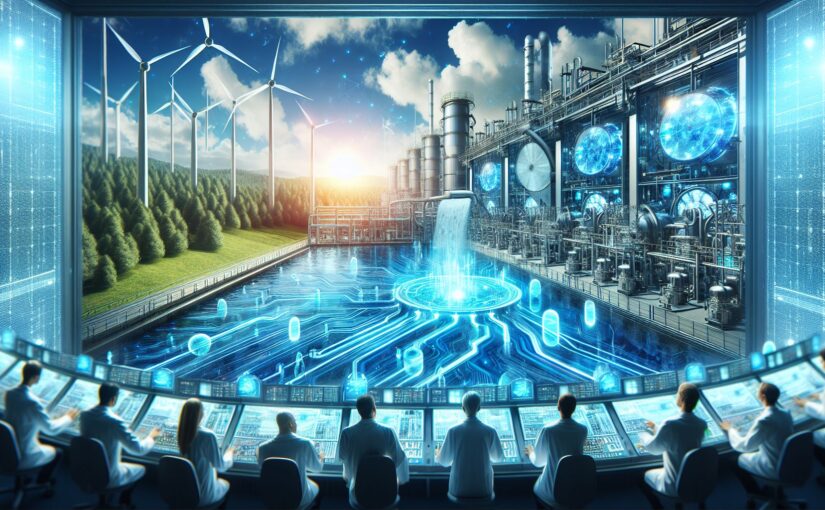
As global energy demands continue to rise, there’s been a concerted search for innovative, sustainable, and cost-effective power sources. Yet, an immense untapped potential lies in an everyday byproduct – wastewater. Yes, that’s right–wastewater! This article explores the exciting concept of generating renewable energy from wastewater.
Wastewater: An Underestimated Resource
Typically, wastewater is perceived as a nuisance, a problem to be managed and disposed of appropriately. However, an alternative perspective considers wastewater as an immense repository of energy in the form of organic substances.
Wastewater Treatment and Energy Generation
Wastewater treatment facilities have employed biological processes for years, utilizing microorganisms to eradicate impurities and contaminants before releasing water back into the environment. What if we could harness these microorganisms’ metabolic processes to generate electricity? This proposed method isn’t as far-fetched as it may sound.
A technology known as a Microbial Fuel Cell (MFC) uses the very same bacteria employed in traditional wastewater treatments. These bacteria metabolize organic matter in the wastewater and, in doing so, create electricity.
How Does It Work?
In the most basic terms, an MFC consists of two compartments – an anode and a cathode – separated by a proton exchange membrane. The bacteria colonize the anode compartment. When fed with wastewater, the bacteria oxidize the organics, releasing electrons and protons. These electrons are captured, creating a flow of electric current.
Sustainable, Eco-friendly, and Economical
The benefits of generating renewable energy from wastewater are manifold:
- Reduced energy costs: Wastewater treatment facilities can potentially become energy-neutral or even energy-positive, drastically slashing utility expenses.
- Less emissions: It provides an eco-friendly way of managing wastewater while simultaneously reducing greenhouse gas emissions.
- Resource recovery: Utilizing wastewater in power generation also promotes the recovery of valuable resources such as nutrients and water, leading to a more circular economy.
The process is still being fine-tuned to maximize its effectiveness and practicality. Nonetheless, the concept of generating renewable energy from wastewater has already demonstrated enough promise to warrant further investigation and implementation.
For more in-depth information and recent studies, please consult these sources: