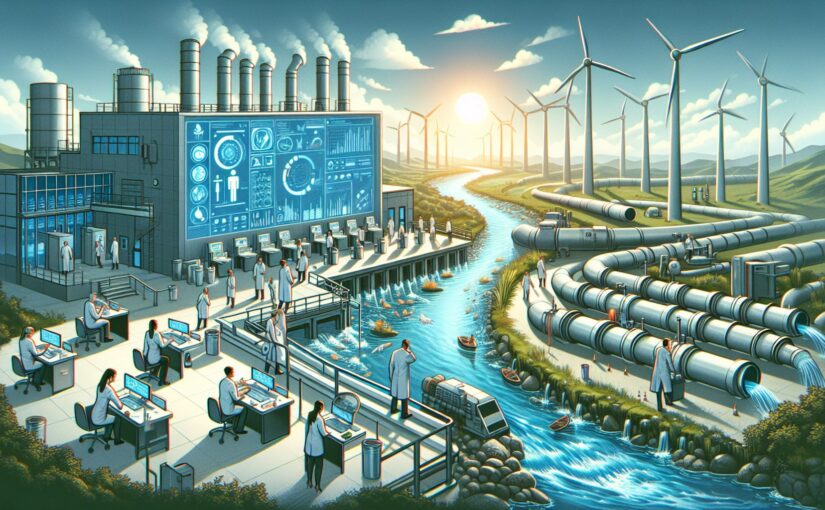
Wastewater contains organic materials that can be harvested to generate renewable energy. Ongoing advancements in technology and science have given us a perfect solution to deal with wastewater treatment, saving energy and contributing to the green energy pool. Let’s explore the potential and advancements in developing renewable energy from wastewater.
Wastewater: A Potential Energy Source
Wastewater is no longer seen as just waste. Research and scientific development have unlocked its potential as a significant and yet unexplored source of energy. According to statistics from the International Energy Agency, city sewage could provide approximately 20% of the energy needed to heat water for the whole population [^1^].
From Wastewater to Renewable Energy
How does wastewater conversion to renewable energy work? The secret lies in a specialized process powered by a kind of bacteria called “exoelectrogens.” These bacteria generate electricity while digesting organic matter. Anaerobic digestion or decomposition processes break down the organic substances present in the sludge, resulting in biogas production. This biogas can be further used as a heat source or transformed into electricity [^2^].
Microbial fuel cell (MFC) technology is another prominent method used to harvest electricity from wastewater. MFCs exploit microbes’ metabolism to convert chemical energy to electrical energy. Wastewater MFCs utilize the organic matter in the wastewater as fuel, and along with producing electricity, they treat the wastewater [^3^].
Advancements And The Future
Various modifications are being done in the design of bioelectrochemical systems to increase the power output and efficiency. The process involves optimizing and improvising different factors such as system configuration, design of the anode and cathode compartments, choice of electrode materials, and system operation parameters.
Research is also focused on finding efficient exoelectrogenic bacterial strains and operational conditions that could maximize power output and wastewater treatment efficiency. Scaling up of MFCs for industrial and municipal wastewater treatment and electricity generation is also a significant area of research [^3^].
Conclusion
As we look for sustainable and renewable sources of energy, the importance of wastewater recovery will become more apparent. Steps are already being taken towards commercializing these technologies, and as more advancements occur, we can expect to incorporate wastewater treatment into our energy grid. This remarkable technology not only contributes to the renewable energy pool, reducing our carbon footprint, but also treats wastewater, which benefits the environment in more ways than one.
With the stakes higher than ever before, it’s clear that renewable energy from wastewater is heavier on rewards than risks.
References
[^1^]: International Energy Agency. (2012). Water Energy Nexus Excerpt from the World Energy Outlook 2016. Accessible at https://www.iea.org/reports/world-energy-outlook-2016
[^2^]: Mu, Y., Rabaey, K., Rozendal, R. A., Yuan, Z., & Keller, J. (2009). Decentralized sanitation and renewable energy from wastewater. Environmental Science & Technology, 43(20), 7777-7782.
[^3^]: Logan, B. E., & Rabaey, K. (2012). Conversion of wastes into bioelectricity and chemicals by using microbial electrochemical technologies. Science, 337(6095), 686-690.