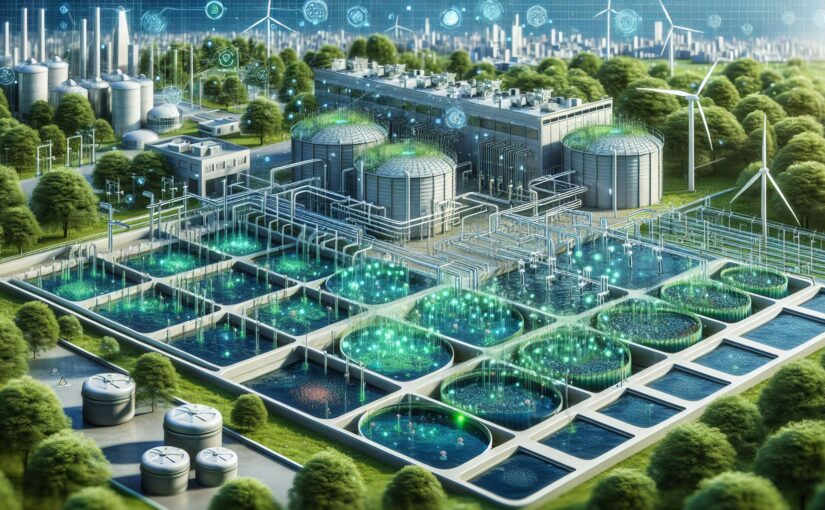
Wastewater is typically viewed as a byproduct of our everyday lives that needs to be treated and disposed of safely. However, an exciting paradigm shift is placing wastewater under a new lens—as a potential source of renewable energy. Innovative technologies, such as Bioelectrochemical Systems (BES), are being developed to harness this untapped resource. This article delves into the process of generating renewable energy from wastewater and explores the mechanisms, benefits, and challenges of this eco-friendly approach.
Introduction
Globally, the demand for renewable energy sources is escalating as the effects of climate change and the depletion of fossil fuels become increasingly pressing concerns. Alongside wind, solar, and hydro-power, an unconventional player is entering the renewable energy arena: wastewater. Treatment facilities manage vast quantities of wastewater daily, and if utilized correctly, this water can contribute significantly to our clean energy portfolio.
One such technology leading the charge is Bioelectrochemical Systems (BES), which include Microbial Fuel Cells (MFCs) and Microbial Electrolysis Cells (MECs). These systems enable the extraction of electric power from the organic matter present in wastewater through biological and electrochemical processes. This synergy of biology and engineering not only promises a greener path for wastewater treatment but also a new horizon for sustainable energy production.
The Science Behind Bioelectrochemical Systems
Understanding Bioelectrochemical Wastewater Systems
BES are devices that use bacteria to break down organic matter in wastewater. The process is twofold: the organic material serves as a nutrient for the bacteria, and the metabolic reactions within the bacteria generate electricity. Essentially, these systems use the energy content of wastewater to produce power, reducing the organic load of the water while generating electricity simultaneously.
Electroactive Wastewater Bacteria and Exoelectrogens
The cornerstone of BES is the electroactive bacteria, commonly known as exoelectrogens. These bacteria possess the ability to transfer electrons outside their cells to an electrode. When organic matter is metabolized, electrons are released as a byproduct. In nature, bacteria may transfer these electrons to minerals to complete their energy cycle. In BES, these electrons are diverted to an electrode, thereby generating an electric current.
Mediator-less and Mediator-based MFCs
MFCs are divided into two types based on the electron transfer mechanism: mediator-less and mediator-based. Mediator-less MFCs rely on direct contact between bacteria and the electrode, which requires electrochemically active bacteria capable of transferring electrons directly to the electrode surface. In contrast, mediator-based MFCs use chemical compounds that shuttle electrons from the bacteria to the electrode. While mediator-based MFCs have been effective, concerns over the cost and toxicity of mediators have escalated the interest in mediator-less MFCs.
Anode Respiring Wastewater Bacteria
Anodes are critical components in BES as they collect electrons from the bacteria. The ‘anode-respiring bacteria’ have specific metal-reducing abilities that allow them to “breathe” using anodes as their electron acceptors. These specialized bacteria form biofilms on the anode surface and facilitate a high rate of electron transfer, proving instrumental in maximizing energy generation.
The Role of Cathodes: Wastewater Bioanodes and Biocathodes
Similarly, cathodes play a vital role in completing the circuit by accepting the electrons from the anode. In BES, biocathodes can be used, which are cathodes that incorporate living organisms to catalyze the reduction reaction on the electrode. While oxygen is often the final electron acceptor in the cathode chamber of MFCs, biocathodes can also reduce other substances, like nitrates or sulfates, potentially providing additional wastewater treatment benefits.
The Benefits of Generating Renewable Energy from Wastewater
Treatment and Energy Generation
The ability to treat wastewater while simultaneously extracting energy is a game-changer. Conventional wastewater treatment is energy-intensive, but BES can help offset this demand by recovering part of that energy. This can diminish the carbon footprint of wastewater treatment facilities and possibly transform them from energy consumers into energy-neutral or even energy-positive entities.
Resource Recovery
Beyond energy, BES can aid in the recovery of valuable resources. For instance, MECs can produce hydrogen gas which can be used as a clean fuel. In addition, certain BES configurations can extract phosphorus from wastewater, a vital nutrient that is facing depletion on a geological scale.
Technical Challenges and Potential Solutions
Efficiency and Scalability
One of the primary challenges in utilizing BES is efficiency, particularly the conversion efficiency of organic matter to electricity, known as coulombic efficiency. Various factors such as electrode materials, system design, and operational conditions influence this efficiency. Additionally, scaling up from laboratory prototypes to full-scale systems is a significant hurdle, as much of the research is still at the bench scale or pilot stage.
Electrode Materials and Designs
Electrode material strongly impacts BES performance. Carbon-based electrodes are popular due to their conductivity and biocompatibility, but researchers are also exploring catalyst-coated electrodes to improve performance. Furthermore, developing cost-effective and sustainable electrode materials remains pivotal for commercial-scale applications.
Cost and Economic Viability
The economic viability of renewable energy from wastewater largely hinges on the cost of BES components and their longevity. Research is directed towards lowering capital costs and improving system durability to make this technology financially competitive with other forms of renewable energy generation.
Future Directions and Conclusion
Developments in Research and Application
As the research on BES advances, continuous flow systems, stacked configurations, and other innovations like plant-microbial fuel cells are emerging. These innovations aim to increase power densities and establish stable and efficient operations over long periods. Environmentally, the combined wastewater treatment and energy production approach is a win-win, offering a sustainable path for both water and energy sectors.
Transition to Practical Applications
For BES to become a mainstay in renewable energy and wastewater treatment, significant strides must be taken in addressing practical application challenges. These include optimizing system configurations, ensuring reliability, and navigating the regulatory landscape related to water quality and energy integration.
The Role of Policy and Investment
The final piece of the puzzle lies in policy and investment. Incentives from governments and interest from the private sector are crucial in fostering the development and deployment of BES. Strategic funding and supportive policies can accelerate the refinement of BES and bring them closer to widespread use.
Sources
-
Logan, B. E., & Rabaey, K. (2012). “Conversion of wastes into bioelectricity and chemicals by using microbial electrochemical technologies.” Science, 337(6095), 686-690. doi: 10.1126/science.1217412
-
Pant, D., Singh, A., Van Bogaert, G., Olsen, S. I., Nigam, P. S., Diels, L., & Vanbroekhoven, K. (2012). “Bioelectrochemical systems (BES) for sustainable energy production and product recovery from organic wastes and industrial wastewaters.” RSC Advances, 2(4), 1248-1263. doi: