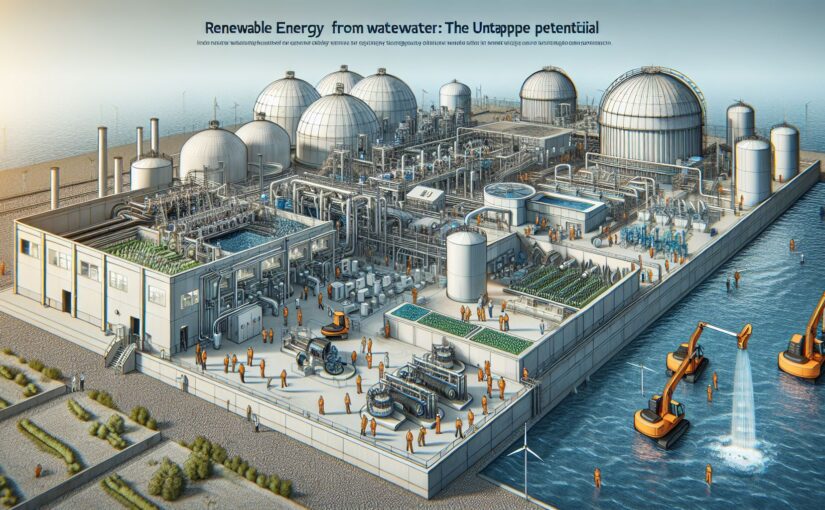
Wastewater – often considered an undesirable byproduct of our urban and industrial activities – has hidden potential. Behind the muddy waters laden with organic matter and pollutants lies a source of renewable energy that can transform waste into wattage. This underexploited resource brings together sustainability, innovation, and environmental stewardship. In this comprehensive article, we’ll delve into the potentials of generating renewable energy from wastewater and how this prospect can shift the paradigm of waste management and energy production.
Understanding the Basics of Renewable Energy from Wastewater
Before we dive into the depths of renewable energy generation from wastewater, it is crucial to understand the essence of wastewater and the concept of renewable energy.
What is Wastewater?
Wastewater is water that has been contaminated by human use, ranging from domestic sewage to industrial effluents. It contains a wide variety of chemical, biological, and physical pollutants. The traditional goal of wastewater treatment has been to remove these pollutants before releasing the water back into the environment. However, this waste contains organic material that harbors energy.
Renewable Energy: A Primer
Renewable energy is derived from natural processes that are replenished constantly. This includes energy generated from solar, wind, geothermal, hydroelectric, and biomass sources. In the context of wastewater, the focus is on the conversion of organic material into energy, which aligns with the principles of sustainability and energy conservation.
The Nexus of Wastewater and Renewable Energy
The link between wastewater and renewable energy is rooted in the ability of certain technologies to convert organic material in wastewater into electricity. Here’s where the concept of Microbial Fuel Cells (MFCs) comes into play.
What are Microbial Fuel Cells (MFCs)?
Microbial Fuel Cells (MFCs) are devices that use bacteria to convert organic matter directly into electricity through biochemical processes. These systems harness the metabolic processes of electroactive bacteria, which can transfer electrons to an electrode as they digest organic compounds. MFCs consist primarily of an anode, a cathode, and an ion exchange membrane, operating in an environment where microorganisms feed on wastewater substrates.
How Do MFCs Work?
In an MFC, wastewater is introduced into the anodic compartment, where electroactive bacteria break down the organic pollutants. During this process, electrons are released as a byproduct of the metabolic reactions. These electrons are then transferred to the anode, flow through an external circuit (generating electricity), and finally reach the cathode where they combine with protons and oxygen to form water. This electron flow is the essence of electricity generation in an MFC.
The Potential of Generating Renewable Energy from Wastewater
Energy Recovery and Sustainability
Wastewater treatment plants (WWTPs) are traditionally energy-intensive operations. By integrating MFCs into WWTPs, it is possible to offset some energy consumption by generating electricity from the organic material present in the wastewater. This proposition not only reduces the energy footprint of WWTPs but also contributes to a more sustainable energy system.
Environmental Benefits
Generating renewable energy from wastewater also has significant environmental benefits. It reduces the reliance on fossil fuels, leading to a decrease in greenhouse gas emissions. Additionally, MFCs can remove pollutants more effectively than some conventional treatment processes, resulting in cleaner effluents.
Economic Incentives
While the initial installation and setup costs of MFCs can be high, the long-term returns are promising. Energy generation from wastewater can lower operating costs of WWTPs and potentially create a revenue stream if excess energy is sold back to the grid.
Challenges and Innovations in Renewable Energy from Wastewater
Although the potential is promising, there are challenges to overcome for the widespread adoption of this technology.
Technological Barriers
Key technological barriers include low power output, scalability issues, and durability of MFCs. Current research is focused on improving electrode materials, optimizing the design of MFCs (e.g., the architecture of the anode and cathode), and exploring new biocatalysts to enhance performance.
Economic and Regulatory Hurdles
For renewable energy from wastewater to reach its full potential, both economic and regulatory frameworks need to adapt. Investments in R&D, subsidies for renewable energy projects, and regulations that incentivize energy recovery from waste can drive the growth of this sector.
The Future of Renewable Energy from Wastewater
As research progresses, pilot projects and commercial-scale applications are beginning to demonstrate the viability of this technology. For example, the use of stacked or serial MFCs can increase the power production by multiplying the number of cells in a given setup, leading to a higher cumulative energy output.
Continuous flow MFCs aim to match the constant influx of wastewater to WWTPs, enabling steady energy generation. Innovations like sediment MFCs apply the technology to aquatic sediments, broadening the array of potential applications.
Conclusion
Renewable energy from wastewater represents a win-win solution for both the environment and the energy industry. By converting waste into a valuable resource, we can reduce pollution, conserve natural resources, and move towards a more sustainable and resilient energy landscape. Continued research and investment in this field will be crucial to overcoming the remaining challenges and maximizing the potential of our wastewater resources.
Sources
- Logan, B. E., & Regan, J. M. (2006). Electricity-producing bacterial communities in microbial fuel cells. Trends in Microbiology, 14(12), 512-518. https://doi.org/10.1016/j.tim.2006.10.003
- Rabaey, K., & Rozendal, R. A. (2010). Microbial electrosynthesis — revisiting the electrical route for microbial production. Nature Reviews Microbiology, 8(10), 706-716. https://doi.org/10.1038/nrmicro2422
- Lefebvre, O., Moletta, R., & Flora, J. R. V. (2007). Treatment of organic pollution in industrial saline wastewater: A literature review. Water Research, 41(15), 3671-3682. https:doi.org/10.1016/j.watres.2007.06.037
The convergence of wastewater treatment and the production of clean energy heralds a new era in which our societies can address two critical issues simultaneously. With the proper support and innovations, wastewater could become one of our most valuable resources in the quest for a greener future.