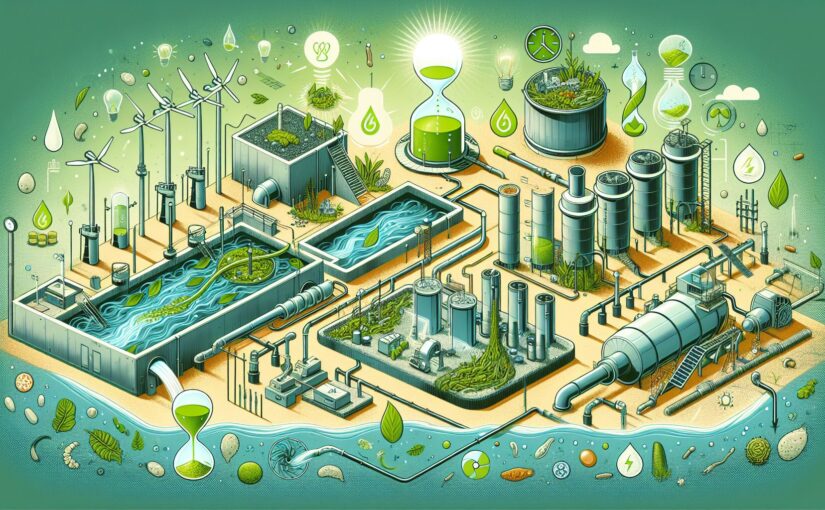
The journey of wastewater from being a mere effluent to a potential source of renewable energy has garnered significant attention in the contemporary world of environmental engineering and sustainability. One of the most promising and innovative approaches to this transformation lies in the realm of bioelectrochemical systems (BES), specifically through the use of microbial fuel cells (MFCs) for wastewater treatment. In this article, we delve deep into how renewable energy can be harnessed from wastewater, exploring the mechanisms, benefits, challenges, and the future outlook for this exciting intersection of technology and environmental science.
Understanding Wastewater and its Potential
Before we unpack how wastewater can be converted into renewable energy, it is crucial to understand what constitutes wastewater and why it is an energy-rich resource. Wastewater typically comes from residential, industrial, and commercial sources and is loaded with organic material and nutrients. While traditionally viewed as a waste product to be treated and disposed of, the organic matter within wastewater can be an untapped reservoir of chemical energy.
Microbial Fuel Cells (MFCs): A Primer
MFCs are bioelectrochemical systems that leverage the metabolic processes of microbes to convert organic matter in wastewater into electricity. They consist of an anode and a cathode, separated by a proton exchange membrane. Electroactive bacteria at the anode oxidize the organic compounds, releasing electrons and protons in the process. The electrons travel through an external circuit to the cathode, generating an electric current, while the protons cross through the proton exchange membrane to the cathode chamber. At the cathode, electrons and protons combine with oxygen to form water—completing the circuit.
The Role of Electroactive Wastewater Bacteria
The secret weapon of MFCs lies in the electroactive bacteria that colonize the anode. These bacteria, also known as exoelectrogens, possess the unique ability to transfer electrons extracellularly to the anode. This remarkable feature distinguishes them from other bacteria and makes them the protagonist in the bioelectrical narrative.
Harnessing Energy: From Organic Matter to Electricity
The process starts with the breakdown of organic material in the wastewater by the anode-respiring bacteria. The electrons generated during this degradation flow to the anode, then through a load that can harness electrical energy. As a consequence, the MFC produces a continuous stream of bioelectricity as long as there is a supply of wastewater to fuel the bacterial activity.
Advantages of Generating Renewable Energy from Wastewater
Environmental Benefits
- Reduced Greenhouse Gas Emissions: By generating renewable energy, MFCs can decrease reliance on fossil fuels and thereby reduce greenhouse gas emissions.
- Sustainable Waste Treatment: MFCs provide an eco-friendly option for wastewater treatment, combining waste disposal with energy recovery.
- Water Quality Improvement: Post-treatment, the quality of water improves significantly, which is beneficial for the environment.
Economic and Operational Benefits
- Cost-Effectiveness: MFCs can reduce the overall cost of wastewater treatment by producing energy as a by-product.
- Efficiency: Bioelectricity generation offers a way to extract more value from existing wastewater treatment infrastructures.
- Low Maintenance: MFCs often require less maintenance compared to conventional wastewater treatment methods.
Challenges and Considerations
While the concept is promising, several challenges need to be addressed for widespread adoption:
Technological Hurdles
- Energy Output: The power density and coulombic efficiency of MFCs must be increased for practical application.
- Electrode Materials: The design and materials of electrodes need further optimization to enhance performance and reduce costs.
- Scaling Up: Transitioning from laboratory-scale models to full-scale wastewater treatment facilities poses significant engineering challenges.
Economic and Social Barriers
- Initial Investment: High startup costs for integrating MFC technology into existing infrastructure can be a deterrent.
- Public Perception: Educating stakeholders and the public about the benefits and safety of this technology is crucial for its acceptance.
- Regulatory Framework: Developing regulations and standards to support the implementation of MFCs in wastewater management is necessary.
Future Outlook and Developments
The future of renewable energy generation from wastewater looks promising with continuous advancements in MFC technology. The focus on scaling up the process and improving MFC designs to enhance power output is critical. Furthermore, interdisciplinary research involving microbiology, electrochemistry, materials science, and environmental engineering is paving the way for more innovative and efficient systems.
Emerging Trends
- Hybrid Systems: Combining MFCs with other renewable energy technologies, such as solar or wind, can boost overall system efficiency.
- Smart Grid Integration: The integration of MFCs into smart grid systems can help in balancing and supplying energy on demand.
- Waste to Value: The concept of waste refinement could evolve, with wastewater MFCs contributing to a circular economy by producing energy along with other valuable byproducts like clean water and possibly even hydrogen.
Conclusion
The prospect of generating renewable energy from wastewater represents an exciting convergence of waste management and energy production. With continued research and development, MFC technology holds the promise of turning our sewage systems into power plants, transforming the way we think about waste and energy resources. As our world grapples with the pressing needs of sustainable development, harnessing the latent energy in wastewater may offer a piece of the puzzle towards a cleaner, greener, and more energy-abundant future.
Sources
- Logan, B. E. (2012). Microbial Fuel Cells. John Wiley & Sons.
- Pant, D., Van Bogaert, G., Diels, L., & Vanbroekhoven, K. (2010). A review of the substrates used in microbial fuel cells (MFCs) for sustainable energy production. Bioresource Technology, 101(6), 1533–1543. https://doi.org/10.1016/j.biortech.2009.10.017
- Rabaey, K., & Rozendal, R. a. (2010). Microbial electrosynthesis — Revisiting the electrical route for microbial production. Nature Reviews Microbiology, 8(10), 706–716. https://doi.org/10.1038/nrmicro2422