The quest for sustainable and renewable energy sources has been at the forefront of global research and policy agendas due to the increasing demand for energy, looming climate change threats, and the depletion of fossil fuels. Interestingly, our search for clean energy coincides with another persistent challenge: the effective treatment of wastewater. In this context, microbial fuel cells (MFCs) emerge as a fascinating technology that not only helps in the treatment of wastewater but also in the generation of electricity, thereby turning waste into a valuable resource. Here, we will delve deep into the concept of renewable energy generation from wastewater through microbial fuel cells, exploring its principles, benefits, challenges, and future prospects.
What are Microbial Fuel Cells (MFCs)?
Microbial fuel cells are bio-electrochemical systems that harness the power of bacteria to convert organic matter in wastewater into electrical energy. By utilizing the natural processes of bioelectrochemical systems, MFCs offer a double-edged sword against waste management and energy scarcity.
The Mechanism of Energy Generation in MFCs
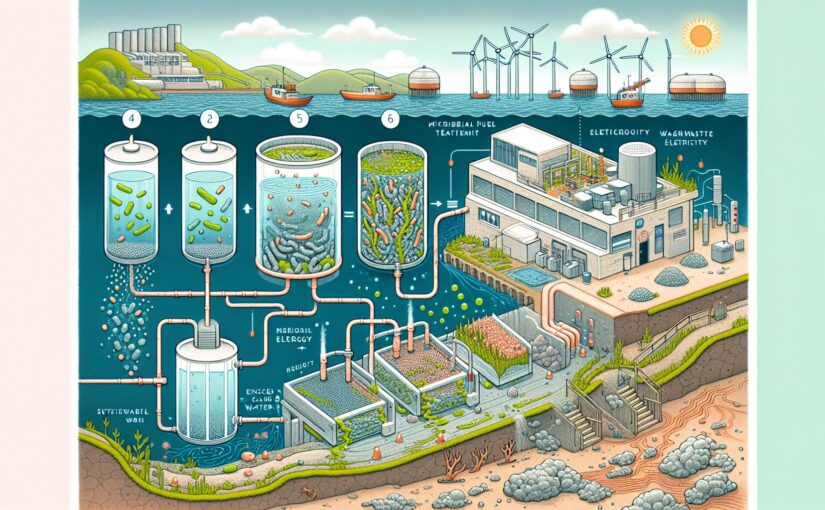
MFCs typically consist of two compartments or chambers: the anode and the cathode, separated by a proton exchange membrane. The anode chamber is where the wastewater is introduced, containing organic matter that serves as fuel. Electroactive bacteria in the anode chamber break down the organic matter through a process known as anaerobic respiration.
During this process, electrons are released as the bacteria metabolize the organic substances. These electrons cannot be directly used by the bacteria to produce energy, so they are transferred to the anode. From there, the electrons flow through an external circuit to the cathode, generating an electric current. Back in the MFC, protons also produced during metabolism pass through the proton exchange membrane to the cathode chamber, where they recombine with electrons and oxygen (from air or added oxidants) to form water—completing the electrical circuit.
The Role of Electroactive Wastewater Bacteria
Electroactive bacteria are the key players in MFCs as they are able to transfer electrons outside of their cells to the anode. These bacteria, sometimes referred to as exoelectrogens, have unique metabolic pathways that support extracellular electron transfer. Remarkable species involved in this process include Shewanella oneidensis and Geobacter sulfurreducens.
The Environmental and Economic Benefits of Using MFCs for Wastewater Treatment
MFCs afford numerous advantages as a renewable energy technology:
-
Energy Efficiency: MFCs can directly convert chemical energy from organic waste into electricity without the need for energy-intensive aeration, which is required in traditional wastewater treatment processes.
-
Pollutant Reduction: As organic matter is degraded to generate electricity, the overall load of pollutants in the wastewater is significantly reduced.
-
Oxygen Demand: MFCs operate in mostly anaerobic conditions, which means they reduce the biochemical oxygen demand (BOD) in wastewater, a common measure of the amount of organic pollution present.
-
Carbon Footprint: Utilizing waste as a resource, MFCs contribute to a lower carbon footprint compared to fossil fuels and conventional wastewater treatment methods that consume lots of energy.
Overcoming the Challenges Faced by MFCs in Renewable Energy Generation
Despite the remarkable benefits, several challenges inhibit the widespread adoption of microbial fuel cells for energy generation from wastewater:
-
Low Power Output: The power densities are currently lower than what is necessary for commercial viability. Research is ongoing into ways to boost the power output of MFCs.
-
Scale-up Issues: Scaling up MFCs from laboratory settings to real-world wastewater treatment plants is not straightforward and requires substantial investment.
-
Cost of Materials: The materials currently used, particularly the proton exchange membranes and electrodes, are expensive, making large-scale applications financially challenging.
-
Long-term Stability: Maintaining long-term performance and stability of MFCs in practical applications needs to be ensured.
Future Prospects and Innovations in MFC Technology
The future of renewable energy from wastewater looks promising with continuous innovation in MFC technology. Some of the key areas of research include:
-
Nano-engineered Electrodes: Developing electrode materials at the nanoscale to increase the surface area for bacterial attachment and electron transfer, thereby improving the overall performance of MFCs.
-
Genetically Engineered Microorganisms: Tailoring bacteria through genetic engineering to boost their electron transfer rates and enhance the overall efficiency of the system.
-
Integration with Other Renewable Technologies: Pairing MFCs with other renewable energy systems, such as solar or wind, could create a hybrid system that augments energy production.
-
Novel Designs: New MFC designs that optimize flow and reduce resistance could significantly enhance the efficiency of the systems.
-
Cost-effective Materials: Finding affordable substitutes for expensive components, such as using bio-derived materials for membranes and electrodes.
Conclusions
Wastewater is an underutilized resource that holds immense potential for sustainable energy production. Through microbial fuel cells, we are unlocking the energy embedded in wastewater, contributing to a future where waste treatment and renewable energy generation go hand in hand. While challenges remain, ongoing research and technological advancements promise to enhance the viability and implementation of MFCs. By refining this technology, we can better position ourselves to transition to a more sustainable relationship with both energy and the environment.
Sources
- Logan, B. E., & Rabaey, K. (2012). Conversion of wastes into bioelectricity and chemicals by using microbial electrochemical technologies. Science, 337(6095), 686-690. DOI: 10.1126/science.1217412
- Pant, D., Van Bogaert, G., Diels, L., & Vanbroekhoven, K. (2010). A review of the substrates used in microbial fuel cells (MFCs) for sustainable energy production. Bioresource Technology, 101(6), 1533-1543. DOI: 10.1016/j.biortech.2009.10.017
- He, Z., & Mansfeld, F. (2009). Exploring the use of electrochemical impedance spectroscopy (EIS) in microbial fuel cell studies. Energy & Environmental Science, 2(2), 215-219. DOI: 10.1039/B816647H