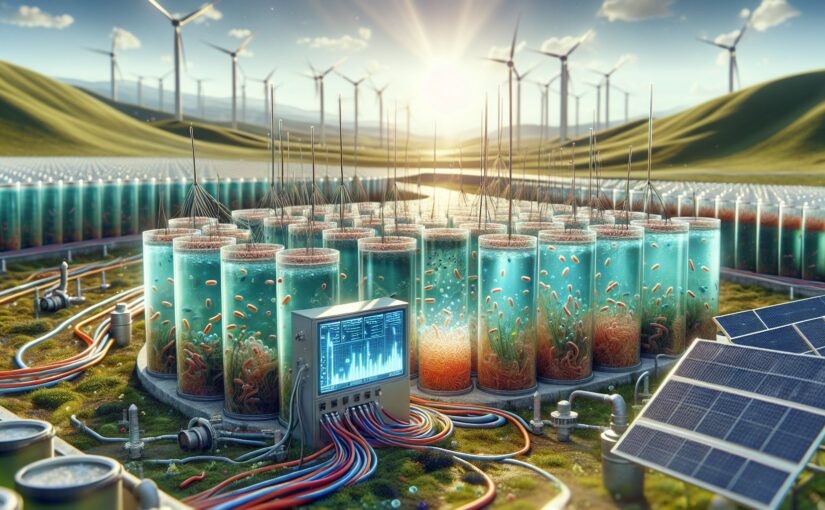
In the pursuit of sustainable energy sources, the benefits of recycling and resource recovery have gained considerable attention. Wastewater, often viewed as a nuisance to be treated and disposed of, is a surprisingly rich source of potential energy. With advances in biotechnological methods, it is now possible to harness this energy using a promising technique known as microbial fuel cells (MFCs). This article delves into the world of renewable energy from wastewater, exploring the principles of MFCs, their environmental and economic benefits, challenges, and the future prospects in this innovative field.
Introduction to Microbial Fuel Cells
Microbial fuel cells are bio-electrochemical systems that leverage the metabolic processes of microorganisms to convert organic matter into electrical energy. As revolutionary as it sounds, the concept has been around since the early 20th century but has only gained traction in the last few decades due to increased environmental consciousness and technological improvements.
The Basic Principle of MFCs
An MFC consists of two chambers, the anode and the cathode, separated by an ion-exchange membrane. In the anode chamber, electroactive bacteria break down organic substrates from the wastewater, releasing electrons and protons. Electrons travel through an external circuit to the cathode, generating an electric current, while protons pass through the ion-exchange membrane to the cathode chamber.
In the cathode chamber, electrons, protons, and oxygen (or another terminal electron acceptor) combine to form water or other benign compounds. This redox reaction drives the flow of electrons, thereby producing bioelectricity.
The Environmental and Economic Benefits of MFCs
MFCs offer significant environmental benefits including:
- Energy-positive wastewater treatment: Unlike conventional treatment processes that consume energy, MFCs produce electricity, reducing the overall energy footprint of waste management.
- Reduction in greenhouse gas emissions: By generating renewable energy, MFCs help mitigate the release of greenhouse gases associated with fossil fuels.
- Minimal sludge production: MFCs typically generate less waste biomass, lowering the cost and environmental impact of sludge disposal.
- Recovery of valuable bioproducts: Besides electricity, MFCs can facilitate the recovery of metals and other valuable materials from wastewater.
Economically, MFCs can potentially reduce the operating costs of wastewater treatment plants (WWTPs) due to their energy-producing capabilities. Also, with the refinement of technologies, MCFs might become a cost-effective solution compared to traditional energy-intensive treatment methods.
Challenges in MFC Technology
Despite their potential, there are several challenges in adopting MFCs for mainstream wastewater treatment:
- Scaling up: MFCs have been successful at the laboratory scale but translating this success to large-scale applications presents challenges in maintaining efficiency and cost-effectiveness.
- Material costs: High costs of membrane materials and electrodes can make MFCs expensive to implement.
- Energy output: The energy currently produced by MFCs is relatively low compared to traditional energy sources, requiring further optimization.
The Future of Renewable Energy from Wastewater
Innovations in Electrode Materials
Researchers are continually exploring new materials to enhance the performance and reduce the cost of MFCs. For instance, the use of carbon-based electrodes, like activated carbon or carbon nanotubes, has shown promise due to their high conductivity and large surface area for bacterial attachment.
Implementation of Stack and Continuous Flow MFCs
To increase power output, researchers are working on stacking multiple MFC units and developing continuous flow systems that can handle large volumes of wastewater more efficiently.
Strategic Integration with Existing Infrastructure
Integrating MFC technology into existing wastewater treatment plants could be a practical approach to realize its benefits without the need for entirely new infrastructure.
Regulatory Support and Funding
For MFC technology to be viable on a large scale, supportive regulations and funding for research and development are crucial. Policies that prioritize renewable energy and sustainability can accelerate the adoption of MFCs.
Public Acceptance and Education
Educating the public and stakeholders about the benefits and potential of MFCs is vital to gain acceptance and investment in this technology.
Conclusion
The potential of generating renewable energy from wastewater using microbial fuel cells presents a fascinating intersection of biotechnology and sustainability. While challenges remain in terms of efficiency, scale, and cost, ongoing research and technological advancements are paving the way for a more sustainable and energy-efficient future in wastewater treatment. With continued innovation, the vision of powering our world in part through the energy hidden in wastewater could very well become a reality.
Sources
- Logan, B.E., & Regan, J.M. (2006). Microbial fuel cells—Challenges and applications. Environmental Science & Technology, 40(17), 5172-5180.
- Pant, D., Van Bogaert, G., Diels, L., & Vanbroekhoven, K. (2010). A review of the substrates used in microbial fuel cells (MFCs) for sustainable energy production. Bioresource Technology, 101(6), 1533-1543.
- He, Z., & Mansfeld, F. (2009). Exploring the use of electrochemical impedance spectroscopy (EIS) in microbial fuel cell studies. Energy & Environmental Science, 2(2), 215-219.