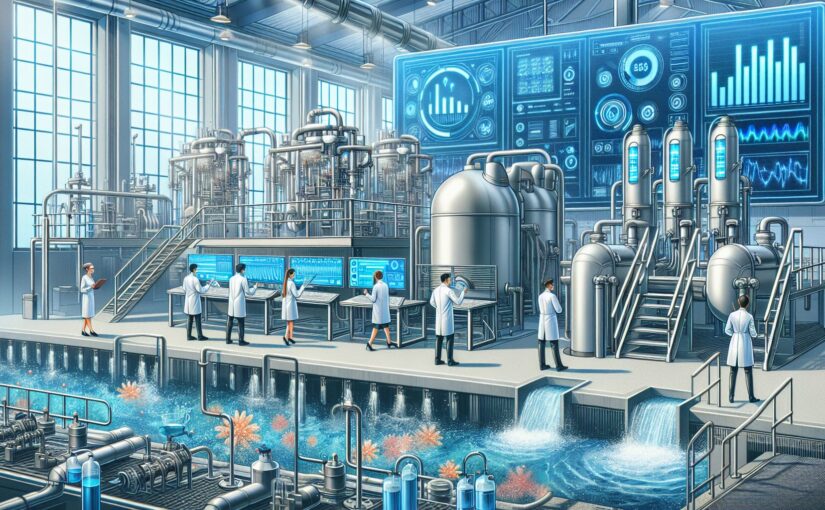
Wastewater is commonly perceived as a problem—a waste product to be treated and disposed of as efficiently as possible. Yet, buried within the noxious sludge of untreated wastewater lies a resource of considerable potential: energy. Recent advancements in the field of bioelectrochemical systems (BES) have illuminated pathways to not only purify wastewater but also to convert the organic matter into clean, renewable energy. This process is paralleled by the growing urgency to seek sustainable energy resources and effective wastewater treatment methods, which are paramount, considering the environmental and economic challenges we face today.
The Promise of Bioelectrochemical Wastewater Systems
Bioelectrochemical systems comprise a remarkable technology that harnesses the natural process whereby bacteria break down organic compounds. As these microorganisms metabolize waste, they can transfer electrons to an electrode, thereby producing an electric current—this is the foundational principle of microbial fuel cells (MFCs) for wastewater treatment. What was once waste is now a valuable commodity in the form of bioelectricity, marrying the processes of waste management and energy generation.
How Do Bioelectrochemical Systems Work?
A bioelectrochemical system is essentially composed of an anode and a cathode separated by an ion exchange membrane. In the context of wastewater, electroactive bacteria attach themselves to the anode and oxidize the organic material present in the wastewater. During this process, electrons are transferred from the bacteria to the electrode, flowing through an external circuit to the cathode where a reduction reaction occurs, often involving the reduction of oxygen to water.
This movement of electrons is what generates electricity. However, the process not only offers the benefit of renewable energy; it also significantly reduces the pollution load in the wastewater, as the microbes consume the contaminants.
The Advantages of Renewable Energy from Wastewater
-
Sustainability: The energy harnessed from wastewater via BES is renewable. The constant inflow of wastewater provides a reliable substrate for energy production.
-
Low Carbon Footprint: The process emits very low levels of greenhouse gases, particularly when compared to traditional fossil fuels.
-
Waste Reduction: Converting waste into energy can decrease the volume of solid waste, lessen the burden on landfills, and mitigate the environmental impact of waste management.
-
Energy Efficiency: BES operates at ambient temperatures, contrasting highly energy-intensive processes like incineration or gasification of waste.
-
Cost-Effective Treatment: BES potentially cuts down on the cost of traditional wastewater treatment, owing to the simultaneous generation of electricity.
Current Challenges and Innovations
Despite the promising aspects of bioelectrochemical wastewater systems, practical challenges need addressing to capitalize on this potential fully.
Electrode Materials and Design
The search for efficient, affordable electrode materials is critical. Graphite and carbon-based electrodes are standard due to their conductivity and microbial compatibility ([1]Logan, B. E. & Regan, J. M., 2006). Advances in material science are crucial to enhancing the performance of BES, as electrode materials significantly affect the energy yield and efficiency of the system.
Efficiencies and Power Densities
The optimization of power densities and Coulombic efficiencies remains a persistent challenge. Power density reflects how much power a system can generate per unit of volume or area, while Coulombic efficiency indicates the portion of electrons transferred from the substrate to current ([2]Cheng, S. & Logan, B. E., 2010). Pushing these parameters higher is a key focus of ongoing research.
Scaling Up
Scaling up bioelectrochemical systems from the laboratory to a practical scale in wastewater treatment facilities has proven complicated. Issues such as maintaining optimal conditions for microbial communities and integrating BES into existing infrastructure pose significant hurdles.
Economic Viability
Inasmuch as the technical obstacles, achieving a favorable cost-benefit ratio is central to the broader acceptance of BES. Continued research and development, supported by policy incentives, can enhance the economic feasibility of this technology.
Looking Ahead: The Future of Bioelectrochemical Wastewater Systems
The future of renewable energy generation from wastewater lies in ongoing innovation and deployment of bioelectrochemical systems. The convergence of biotechnology, material science, and environmental engineering is fostering systems capable of higher efficiencies and robustness needed for widespread adoption.
Policy and Public Perception
Achieving greater use of BES for energy generation from wastewater is as much a legislative and public education effort as a scientific one. Greater awareness of the benefits of this technology and supportive policies can drive investments in BES infrastructure.
Multidisciplinary Collaborations
The complexity of BES calls for collaborations across disciplines to tackle the technological, economic, and social dimensions of this promising system. This collaborative approach can accelerate the refinement and integration of BES into our energy and waste management frameworks.
In conclusion, the integration of bioelectrochemical systems in wastewater treatment holds unimaginable promises for future energy systems—contributing not only to the betterment of the environment but also to the diversification of our energy sources. Although challenges persist, the future looks promising for the valorization of wastewater as a source of clean, renewable energy.
Sources
-
Logan, B. E., & Regan, J. M. (2006). Electricity-producing bacterial communities in microbial fuel cells. Trends in Microbiology, 14(12), 512-518. doi:10.1016/j.tim.2006.10.003
-
Cheng, S., & Logan, B. E. (2010). Ammonia treatment of carbon cloth anodes to enhance power generation of microbial fuel cells. Electrochemistry Communications, 12(5), 628-631. doi:10.1016/j.elecom.2010.03.015
-
Rabaey, K., & Rozendal, R. A. (2010). Microbial electrosynthesis — revisiting the electrical route for microbial production. Nature Reviews Microbiology, 8(10), 706-716. doi:10.1038/nrmicro2422
*Please note that the DOI (Digital Object Identifier) is used to uniquely identify and access academic papers electronically.