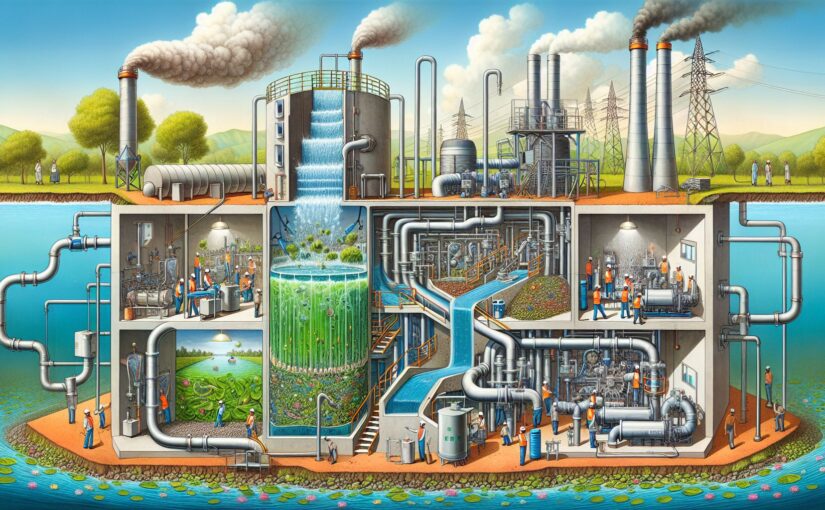
The drive toward sustainable and environmentally friendly technologies has never been more important than it is today. With energy demands rising and the pressing need to address water pollution, there is a convergence in technological advancements aimed at tackling both issues simultaneously. One such innovation that holds significant promise is the generation of renewable energy from wastewater.
Introduction to Wastewater Energy Potential
Wastewater is more than just a byproduct of residential, commercial, and industrial activities—it is a reservoir of untapped energy. Traditional wastewater treatment plants consume a significant amount of energy to remove contaminants and ensure that water is safe for discharge or reuse. Yet, these facilities often overlook the potential energy that can be harvested from the organic matter within the wastewater.
The concept of generating renewable energy from wastewater centers around using the biochemical energy stored in organic waste. Microorganisms play a crucial role in this process, as they break down organic matter and release electrons that can be captured and converted into electrical energy. This approach not only provides a pathway for renewable energy generation but also aligns with efforts to reduce the carbon footprint of wastewater treatment operations.
Microbial Fuel Cells (MFCs): A Core Technology
Microbial fuel cells (MFCs) are at the heart of renewable energy generation from wastewater. An MFC is a bio-electrochemical system that harnesses the power of microorganisms to convert chemical energy into electrical energy directly through metabolic processes.
The Components of an MFC
An MFC typically comprises two chambers: the anode and the cathode, separated by a proton exchange membrane. Microorganisms colonize the anode, consuming organic matter in the wastewater and releasing electrons as a byproduct of their metabolic activities. These electrons travel through an external circuit to the cathode, creating an electric current. Meanwhile, protons generated at the anode pass through the membrane to the cathode, where they combine with electrons and oxygen to form water, completing the circuit.
Advantages of MFCs in Wastewater Treatment
MFCs offer several benefits when integrated into wastewater treatment systems:
- Energy generation: MFCs can produce electricity directly from the organic matter in wastewater, offsetting some of the energy demands of traditional treatment processes.
- Reduced sludge production: By increasing the efficiency of organic matter breakdown, MFCs can result in less sludge generation, which reduces the costs and environmental impact of sludge disposal.
- Low operational costs: Operating at ambient temperatures and atmospheric pressures, MFCs have lower energy inputs compared to conventional aerobic wastewater treatment methods.
- Greenhouse gas reduction: MFCs can lead to a reduction in greenhouse gas emissions by displacing fossil fuel-based electricity and minimizing methane production during the treatment process.
Challenges and Considerations
Despite the potential, several challenges inhibit the widespread adoption of MFC technology:
- Scale-up difficulties: While MFCs perform well at laboratory scales, replicating this success on an industrial scale is technologically and economically challenging.
- Material costs: The materials for electrodes and proton exchange membranes can be costly, especially when considering long-term durability in a harsh wastewater environment.
- Low power outputs: Typical MFCs yield relatively low power compared to the energy requirements of conventional treatment plants, necessitating further research to enhance their efficiency.
Real-world Applications and Case Studies
Several pilot projects and research studies have demonstrated the viability of MFC technology in real-world settings:
- A 2016 study published in the “Environmental Science and Technology Letters” journal showcased a wastewater treatment facility in The Netherlands, integrating MFCs and successfully demonstrating energy-neutral wastewater treatment.
- Researchers at the University of Bath in the UK developed an MFC system that powered a digital display using urine—an example of small-scale, innovative applications of MFC technology in action.
Future Directions for Renewable Energy from Wastewater
Innovations and advancements are paving the way for more effective and economically feasible applications of renewable energy generation from wastewater:
- Advances in electrode materials: Researchers are exploring alternative materials such as carbon-based or catalyst-coated electrodes to improve the efficiency and reduce the cost of MFCs.
- Optimization of microbial consortia: Genetic engineering and synthetic biology approaches are being employed to create optimized microbe populations for enhanced energy recovery.
- Integration with other renewable technologies: Combining MFCs with solar or wind power could lead to hybrid systems that offer greater reliability and higher energy outputs.
Conclusion
Generating renewable energy from wastewater is an exciting and innovative approach that promises to revolutionize wastewater treatment while contributing to the clean energy landscape. As technologies mature and new solutions emerge, it is conceivable that future wastewater treatment plants could not only be energy-neutral but also serve as renewable energy sources.
References
- Logan, B.E. (2009). Exoelectrogenic bacteria that power microbial fuel cells. Nature Reviews Microbiology, 7(5), 375-381.
- Rabaey, K., & Verstraete, W. (2005). Microbial fuel cells: novel biotechnology for energy generation. Trends in Biotechnology, 23(6), 291-298.
- van Lier, J.B., van der Zee, F.P., Freguia, S., & Rabaey, K. (2016). A 1,000-liter microbial fuel cell with mixed anode-cultures for on-site treatment of raw sewage water; power generation, COD removal, and energy balance. Environmental Science and Technology Letters, 3(4), 144-149.
Generating renewable energy from wastewater is an innovative intersection of environmental engineering and biotechnology that offers a dual benefit: cleaner water and a greener future. This highlights both the complexity and the promise of modern sustainable technologies and portrays how today’s innovations could become tomorrow’s solutions for a more sustainable world.